
Last updated October 16, 2026
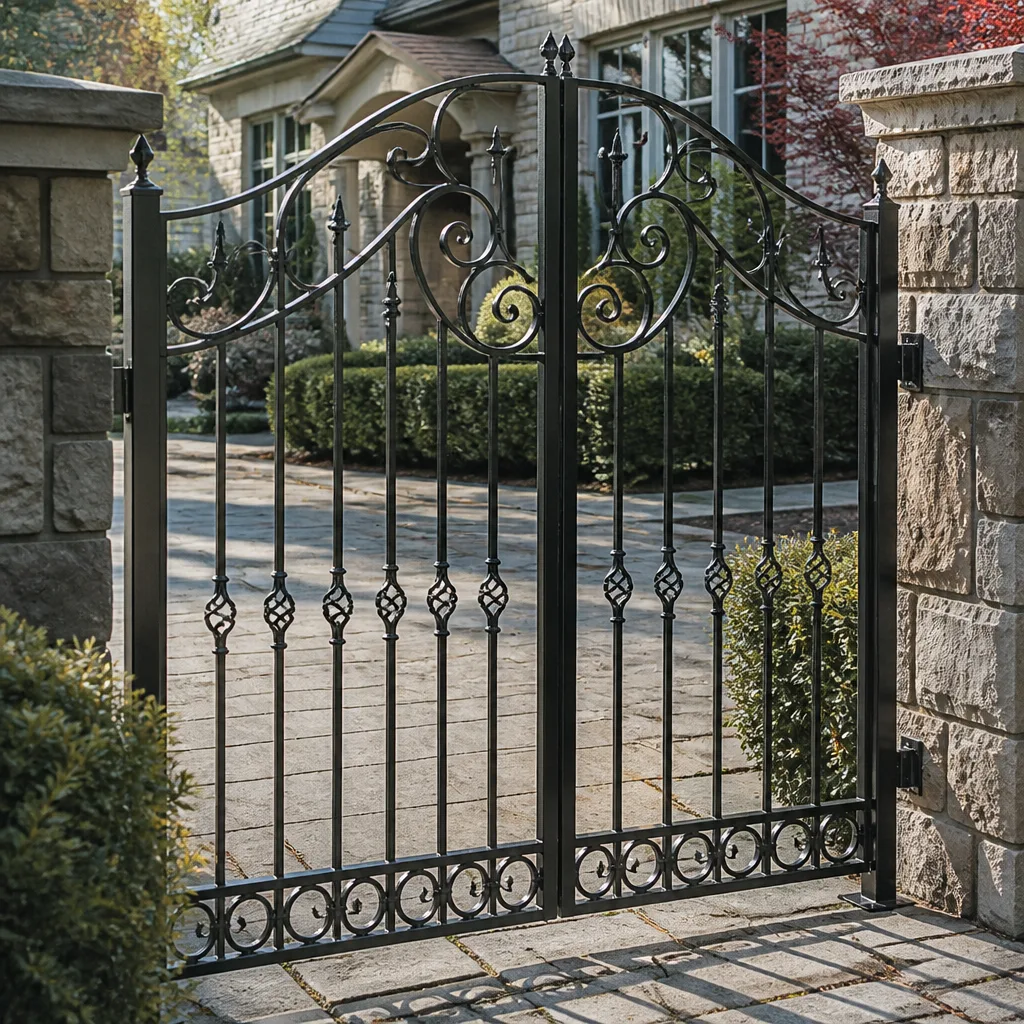 Wrought iron
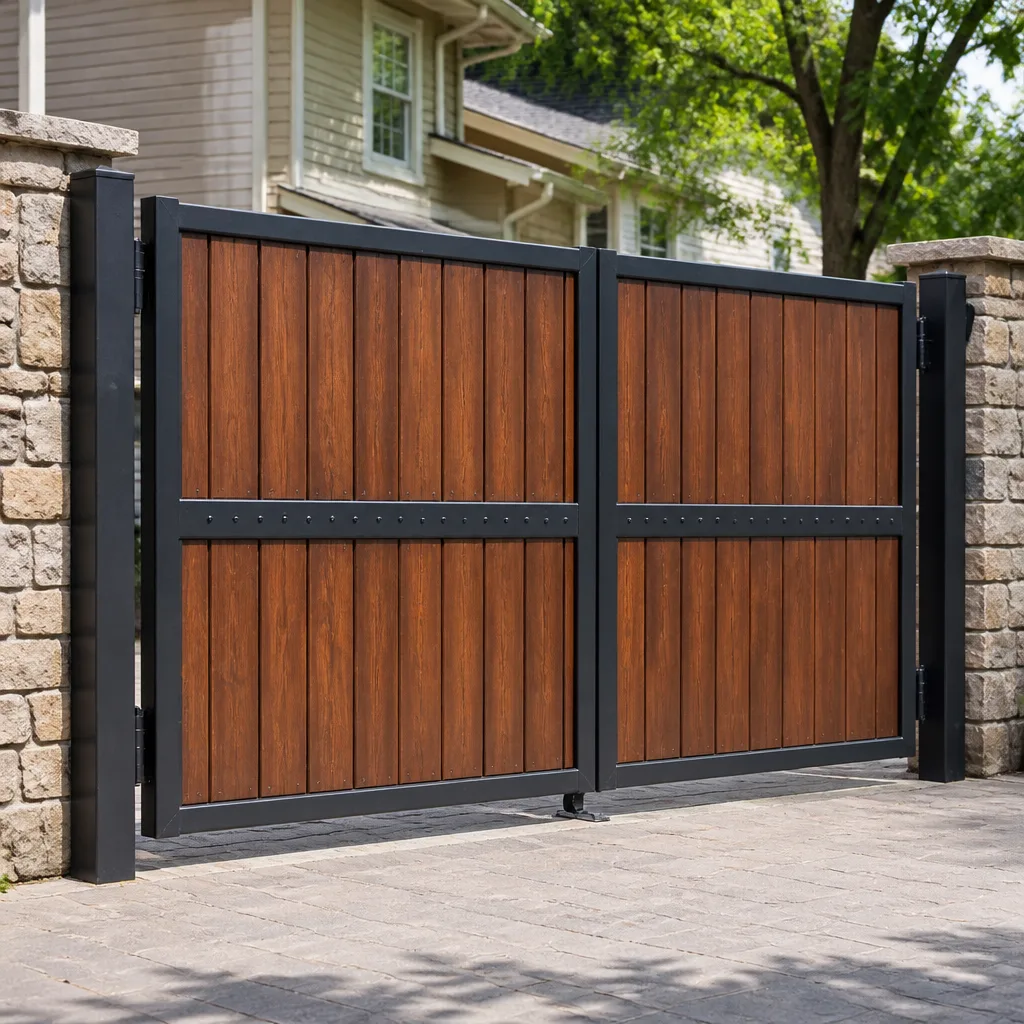 Wood & steel frame
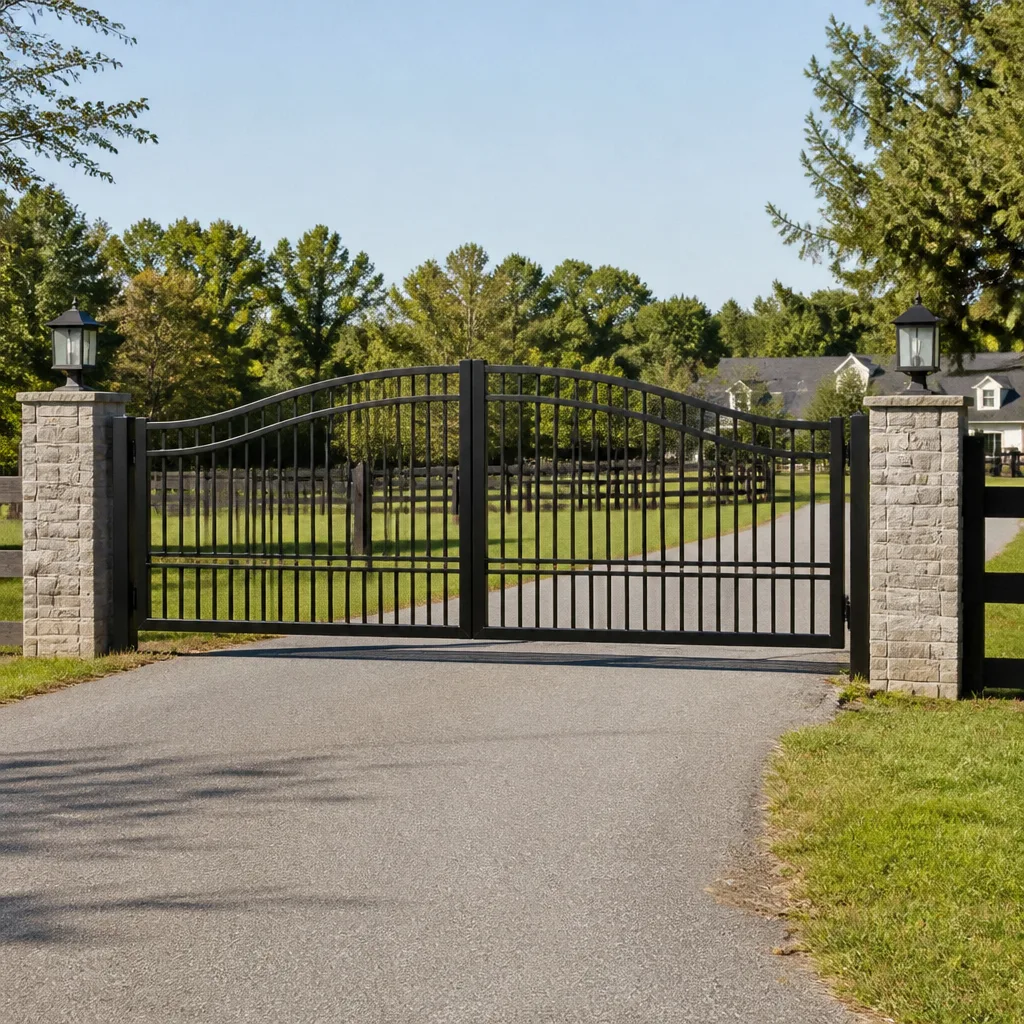 Farm & ranch
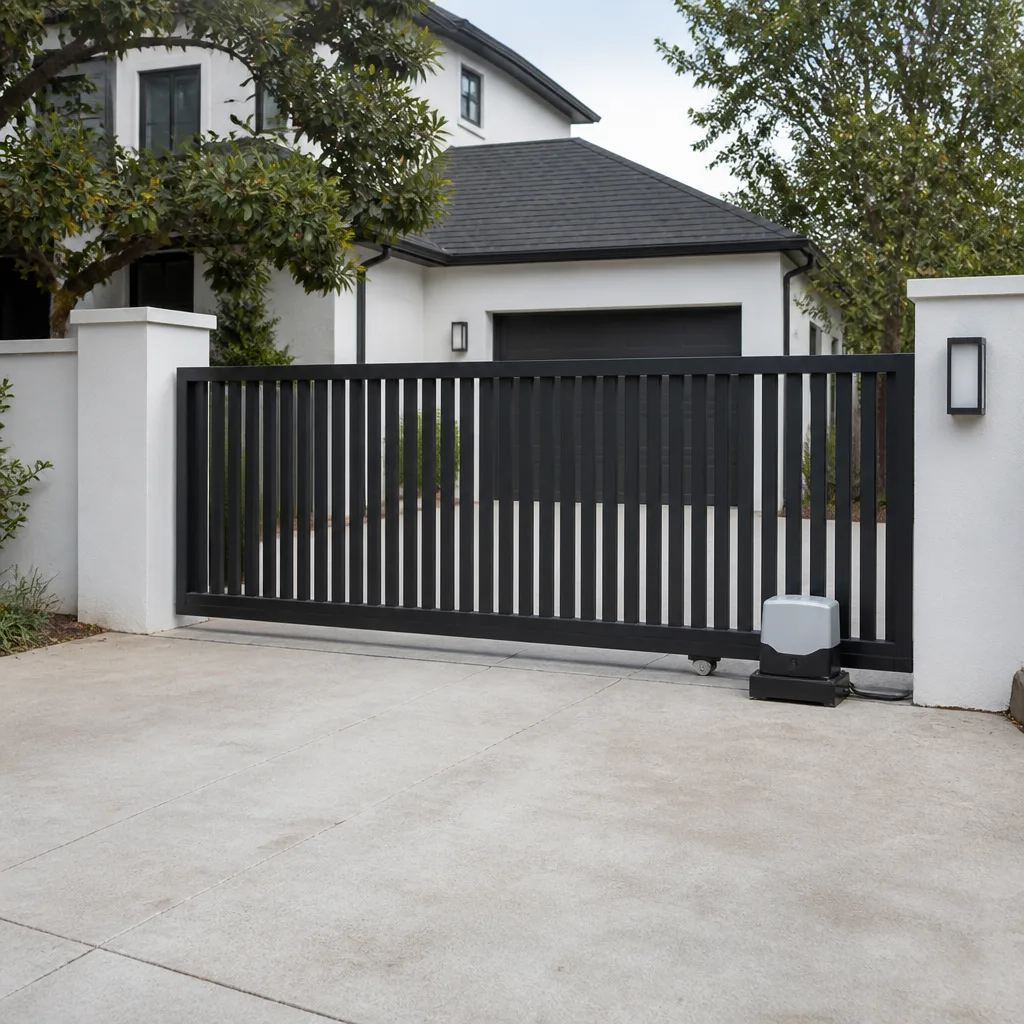 Sliding driveway gates
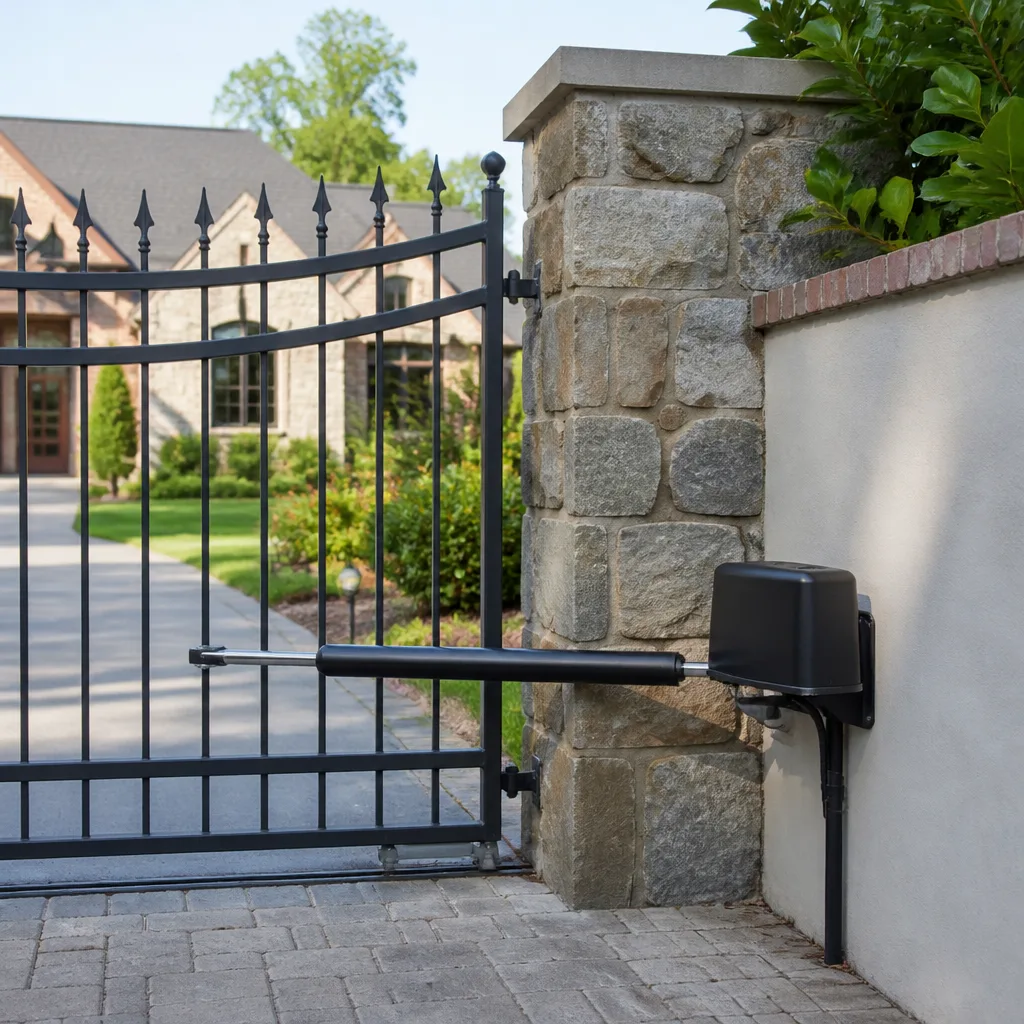 LiftMaster operators
Free on-site gate assessment - hinges, posts, and your LiftMaster or Nice gate operator checked before anything is quoted
The assessment is free and the quote is the invoice.
Get your free estimateGate Repair Warning Signs: A Miami Homeowner’s Reference Guide
A gate that hesitates for two seconds before moving isn’t “stiff from the heat.” It’s a motor pulling above its rated amperage, and in Miami’s temperatures that shortens motor life from years to weeks if ignored. Most gate failures in Miami announce themselves days or weeks before the gate actually stops, but the warning signs here don’t look like the ones you’d find in Phoenix or Dallas. Humidity changes how metal fatigues, heat changes how motors strain, and the relentless salt air near Biscayne Bay accelerates corrosion in ways that surprise even longtime homeowners. This guide names those Miami-specific signals so you recognize them before your gate stops moving, and before a small repair becomes a full replacement. For How to Hire a Gate Repair Contractor in Miami: A Step-by-Step Guide, see our companion resource.
Quick Answer
Gate failure in Miami rarely happens without warning. The most common early signs are a gate that hesitates before moving, a grinding or clicking sound from the motor, visible rust bloom at hinge points, sagging gate panels, and opener lights flashing error codes. If you notice any of these, the repair is almost always cheaper than waiting until the gate seizes entirely. In our experience, a hinge replacement that runs $150 to $300 today becomes an $800 to $1,500 gate rebuild if you wait three months.
Styles & brands we work with
Table of Contents
- Thermal Delay vs. Motor Strain: The Two-Second Test
- Reading Rust: What Your Hinges Are Telling You
- The Sound of Failure: Grinding, Clicking, and Squealing
- The Miami Problem Nobody Talks About: Irrigation Overspray
- Opener Warning Signs: Flashing LED Codes You Shouldn’t Ignore
- Sagging Gates and Hinge Wear: What Gravity Does in Miami
- Wood Gates in Miami: Warp, Rot, and the Humidity Equation
- Common Mistakes to Avoid
- When to Call a Professional
- Frequently Asked Questions
Thermal Delay vs. Motor Strain: The Two-Second Test
Morning stiffness in a gate is real. Metals expand in Miami’s daytime heat and contract at night, and a gate that moves smoothly at noon can feel sluggish at 7 a.m. That’s normal thermal behavior, not a repair issue. The problem is that homeowners use thermal expansion to explain away a symptom that actually means the gate motor (the box that slides or swings your gate automatically) is working too hard.
Here’s how to tell the difference. Stand at your gate with a phone timer. Trigger the gate and count the seconds between when you press the remote and when the gate physically starts moving.
- Zero to one second: Normal operation. The motor’s starting capacitor is healthy and the gate’s weight is balanced.
- One to two seconds, consistent every time: Thermal delay. Expect this on cool mornings. It should disappear by late morning. If it does not, keep reading.
- Two to four seconds, every time, all day: The motor is pulling above its rated amperage. This is not normal. The cause is usually a hinge that has lost lubrication and is binding, a wheel off its track, or a gate that has settled out of level.
- More than four seconds, or a hum with no movement: The capacitor is failing or the motor is stalling. Stop using the gate and call for repair. Every cycle you force through adds heat damage to the motor windings.
We’ve replaced motors in Coral Gables and Pinecrest that were less than two years old because a binding hinge was never addressed. A LiftMaster or FAAC motor that should run for a decade will cook itself in a few months of Miami summer heat if it has to fight the gate on every cycle. The motor itself is rarely the first thing to fail. It’s usually the last warning before the bill gets big.
If your gate hesitates the same way at noon as it does at dawn, gate motor repair in Miami is worth scheduling sooner rather than later. The diagnostic is quick, and the fix is almost always less expensive than a replacement motor.
Reading Rust: What Your Hinges Are Telling You
Rust on a gate face is cosmetic. It’s ugly, but it’s not a structural emergency. Rust on a hinge back, a hinge pin, or the weld points where the gate frame meets the hinge is an entirely different conversation, and in Miami it’s a conversation homeowners need to have early.
Miami’s humidity hovers above 70 percent most of the year. Add salt air within a few miles of the coastline and you get the most aggressive corrosion environment in the United States for exterior metal. We see gate hardware in Cutler Bay and Kendall corroding at two to three times the rate of identical hardware in Orlando or Tampa.
Here’s how to read what you’re seeing:
- Surface rust on a gate face or picket: Sand it, prime it, repaint it. This is maintenance, not repair.
- Rust bloom on the hinge back plate: The rust is pushing between the hinge and the gate frame. This means moisture has penetrated the fastener holes. The hinge is losing its grip. Left alone, the hinge bolts will shear or the gate will sag. This requires immediate attention.
- Orange staining running down from a weld joint: The weld is oxidizing from the inside. The joint is compromised. We’ve seen gates in Homestead where the weld looked solid on the outside and was paper-thin beneath the paint.
- Flaking rust on a hinge pin with visible pitting: The pin is losing mass. The hinge is becoming loose. A loose hinge pin transfers load unevenly to the other hinges, which fail faster.
- Rust on the gate motor housing or control box: Moisture is getting inside the electronics enclosure. This is a short-circuit waiting to happen, not a cosmetic issue.
The hinge is the part of your gate that does all the physical work. A gate repair in Miami focused on hinge replacement typically runs $150 to $300 per hinge depending on gate size and access. A full gate rebuild after hinge failure runs $800 to $1,500. The math is simple, but only if you act on the rust when it first appears.
We recommend a hinge inspection every 18 to 24 months for gates within three miles of Biscayne Bay, and every 30 to 36 months for inland Miami addresses. The inspection takes ten minutes and catches most failures before they happen.
The Sound of Failure: Grinding, Clicking, and Squealing
Your gate talks before it stops. Most homeowners tune the sounds out the way you stop hearing a refrigerator hum, but each distinct noise tells you which component is wearing and how much time you have left.
Grinding is metal on metal with no lubrication. On a sliding gate, it means the gate wheels are worn, the track is misaligned, or the gate is dragging on the rail. On a swing gate, grinding usually comes from the hinge itself: the bushing inside the hinge has failed and the steel parts are now touching directly. The fix is lubrication and hinge replacement, which is inexpensive. The consequence of ignoring it is hinge seizure, which is not.
Clicking, especially rhythmic clicking that happens in time with gate movement, is a chain or belt problem on the opener. On Elite and FAAC swing operators, a click usually means the piston arm linkage has worn at the connection point. On LiftMaster slide operators, a click often means the drive chain has stretched and is jumping a tooth on the gear. This is a repair-now situation. A chain that jumps completely leaves your gate stuck wherever it stopped.
Squealing is the sound of a motor or pump working against resistance. On hydraulic swing operators used in many Miami properties, a squeal under load means the pump is cavitating, usually because hydraulic fluid is low or the filter is clogged. On slide operators, a squeal usually means the drive belt is slipping on the pulley. Both are signs the motor is working too hard, and in Miami’s heat, working too hard means failing early.
A hum with no movement is the most urgent sound on this list. It means power is reaching the motor but the motor cannot turn the gate. The cause could be a failed capacitor, a seized gearbox, or a gate that has physically jammed. Turn the gate to manual mode if you can, and stop using the opener until it’s been diagnosed.
We tell our customers in Palmetto Bay and South Miami to record the sound on a phone and play it for us when they call. The sound alone gets us to the right diagnosis about 70 percent of the time before we even arrive.
The Miami Problem Nobody Talks About: Irrigation Overspray
Every city in Florida has irrigation systems. Miami has irrigation systems aimed with the precision of a Jackson Pollock painting, and the overspray lands on gate posts, gate panels, and control boxes. This is one of the most common failure patterns we see, and almost no one talks about it.
Here’s what the water actually does:
- Wood gate posts and frames: Repeated wet-dry cycling from sprinklers accelerates rot at the base of the post. The base holds the weight of the gate. We’ve removed wood gate posts in Coconut Grove where the part above ground looked almost new and the bottom eight inches could be crumbled by hand. The post base was dissolving while the homeowner saw nothing wrong.
- Block columns and stucco columns: Constant moisture penetrates the masonry through micro-cracks. During Miami’s dry season, the water evaporates and leaves minerals behind. During the wet season, the cycles repeat. Eventually the concrete spalls, the stucco delaminates, and the column loses structural integrity at the exact point where the gate hinge is mounted.
- Control boxes and junction boxes: Irrigation water finds its way into electrical enclosures through conduit fittings and gaskets. We open control boxes in Doral and Fontainebleau that are green inside from moisture exposure. The circuit boards corrode, relays stick, and eventually the gate opens or closes on its own or stops responding entirely.
- Hinges and metal hardware: Sprinkler water accelerates rust exactly where rust does the most damage: at the hinge back plates and fastener holes.
Walk your irrigation coverage zone. Watch where the spray lands when the system runs. If water hits your gate posts, gate panels, or opener box, adjust the sprinkler heads or speak with your irrigation company. This single fix prevents more gate failures in Miami than any other maintenance habit we know of.
The test takes one irrigation cycle. The repair for a rotted post base runs $400 to $900 depending on whether the post can be reinforced or needs full replacement. The split is not a hard one: fix the sprinkler, save the gate.
Opener Warning Signs: Flashing LED Codes You Shouldn’t Ignore
Most modern gate openers from LiftMaster, Elite, and FAAC have built-in diagnostics that flash error codes through an LED on the control board or on an external antenna. These codes blink, blink again, and then pause before repeating. Each manufacturer uses a different code table, but the symptoms that trigger them are consistent.
LiftMaster units use a sequence of flashes on the up-arrow and down-arrow buttons. A common one is two up flashes and three down flashes, which means the opener has detected excessive force while closing the gate. That force is almost always caused by a hinge binding, a wheel dragging on the track, or the gate hitting an obstruction at the close limit. The code is not a glitch. It’s the opener telling you it’s working too hard.
Elite units flash diagnostic codes through a red LED on the control board. A frequently ignored one is a long flash followed by two short flashes: obstacle detected twice in one cycle. Homeowners reset the breaker, the gate works again, and they forget it happened. The problem is that the obstacle detection system only triggers when something is actually interfering with gate travel, and if nothing was in the gate’s path, the gate itself is causing the trigger. A gate in its final stages of hinge failure will set off obstacle detection because the panel is dragging or swinging out of plane.
FAAC units show codes on the control board LCD or through LED blinks. A slow steady blink usually means the battery backup is charging, which is normal. A fast blink pattern means the opener is in error state. FAAC error codes that Miami homeowners most often ignore are the ones related to thermal overload. In Miami, a FAAC hydraulic operator running a heavy gate on a 92-degree afternoon can trip the thermal protection, and when it cools down it works again. The homeowner thinks the problem solved itself. The reality is that the pump is running hotter than it should, and every thermal trip shortens the life of the motor and seals.
If your opener is flashing a code, write the sequence down before you reset power. The code is the opener’s memory of what went wrong, and once you cut power, that memory is usually gone. A technician who arrives after the reset has to guess. A technician who arrives with the code in hand can diagnose from the truck.
We service all three brands regularly through electric gate repair in Miami and carry the common diagnostic tables for each one. The codes are not proprietary mysteries. They exist to save you money if you pay attention.
Sagging Gates and Hinge Wear: What Gravity Does in Miami
Gravity works the same everywhere, but Miami adds a multiplier. High humidity softens wood fibers. Salt air corrodes hinge fasteners. And the daily thermal cycle of Miami’s sun and rain stresses the welds on steel gates more than a stable climate ever would. The result is sag: the gate panel drops at the latch end, the gap at the bottom of the gate changes, and the hinges carry weight they were never designed to hold.
Here’s what sag looks like in real terms:
- The gate drags on the ground at the latch end. The panel has dropped. The cause is hinge fastener wear, post settlement, or hinge bushing failure.
- The gate scrapes against the ground in a curved wear pattern. Especially visible on concrete driveways. The scrape mark shows you exactly how far the gate has sagged and how long it has been dragging.
- The gate latch no longer lines up with the catch. The panel has shifted. Sometimes the gate still latches, but only if you lift the panel manually. That lifting motion is you doing the hinge’s job.
- The gate panel tilts visibly when open. A swing gate that hangs at an angle while standing open has lost hinge integrity. The next stage is complete hinge separation.
A sagging gate repairs fairly cheaply if caught early: hinge replacement, post shimming, and panel re-leveling typically runs $250 to $500 for a standard single swing gate in Miami. The same gate, allowed to sag until the hinges tear out of the post, becomes a $1,200 to $2,500 rebuild project that usually involves a new post or a welded steel repair plate.
The cheapest tool in your kit is a level. Put it on the top rail of your gate once a month. When the bubble starts drifting, you’re looking at the earliest possible warning sign, and that is the moment to call.
Wood Gates in Miami: Warp, Rot, and the Humidity Equation
Wood gates are beautiful right up until the moment humidity destroys them. Miami’s year-round moisture and brutal summer sun work in tandem: the sun dries and shrinks the exterior faces of the wood, the humidity swells the interior, and the uneven tension makes panels warp, crack, and pull against their fasteners.
The warning signs specific to wood gates:
- Hairline cracks radiating from screw heads. The wood has dried enough to lose grip on the fastener. Every screw on a wood gate is a potential failure point, and once the wood cracks, moisture enters the crack and rots from the inside.
- Diagonal warping on gate panels. If the gate panel looks like it’s twisting, the internal wood grain is fighting itself. Warped panels stress the hinges unequally, and one hinge carries the whole load. That hinge fails first.
- Soft spots at the bottom rail or post base. Press with your thumb. If the wood gives, the rot is structural. Paint covers a lot of rot in Miami, and the only way to know is to press.
- Paint bubbling or peeling in horizontal bands. This usually means moisture is migrating through the wood from the inside. The paint is failing because the substrate is wet.
- Visible termite frass or mud tubes at post bases. Miami has one of the most aggressive termite pressures in the United States. A wood gate post is food. If you see mud tubes or fine sawdust, call a pest professional before you call us, because a gate post hollowed by termites will not hold a hinge no matter what we do.
Wood gates in Miami need a maintenance cycle that homeowners in drier climates don’t follow. In our experience, the gate posts are the first thing to go, usually at the 6 to 10 year mark depending on drainage, irrigation overspray, and termite exposure. The gate panels themselves often last longer, which means a post replacement can save a gate that looks fine on the surface.
A full wood gate replacement in Miami runs $1,500 to $4,000 depending on size, wood type, and hardware. A wood post repair runs $400 to $900. The decision point is usually whether the gate panel itself has begun to fail. A post can go bad while the panel is still serviceable, and when that happens, the repair is straightforward.
Common Mistakes to Avoid
- Resetting the breaker to clear an error code without writing the code down. The code is the diagnostic record. Once power is cut, it’s gone. This mistake turns a $50 sensor fix into a $500 mystery hunt.
- Lubricating the track with WD-40. WD-40 is a water displacer, not a lubricant. It washes away whatever grease was there and attracts dirt. Use a lithium-based grease on metal tracks and hinges, and only after cleaning the surface.
- Ignoring a gate that slows down gradually over months. Gradual decline is the easiest thing to normalize. By the time you notice, the motor has been running hot for weeks. A slow gate is a failing gate, not a tired gate.
- Treating rust with paint rather than rust converter. Paint seals rust in and lets it continue eating the metal underneath. The surface looks fine and the section loses strength. Use a rust converter first, then prime, then paint.
- Waiting until the gate stops completely to call. A stopped gate is always the most expensive version of the repair. The chain of failure almost always starts small: a hinge, a wheel, a seal. The cost at the end is two to five times the cost at the beginning.
- Assuming the gate opener brand determines who can repair it. The brand on the box matters less than the training on the technician. We service LiftMaster, FAAC, Elite, Mighty Mule, and the others, and the difference is rarely the parts. It’s knowing what the failure patterns look like and addressing the root cause instead of swapping a part and hoping.
- Leaving irrigation overspray on the gate posts because it’s “just water.” In Miami, water plus heat plus time equals rot. The water is never just water.
When to Call a Professional
Some problems justify our Gate Repair services without hesitation. If your gate is creaking and dragging on the ground, the post has rotted or cracked, the hinges are caked in rust scale, the opener flashes a code you do not understand, or the gate simply stops responding, call someone who does this every day. The repair window is open. The cost is manageable. And in Miami’s humidity, leaving these issues for “later” means the job grows while you wait.
Warden Gate Repair Miami offers free estimates in Miami. Call (850) 495-7564 and describe what your gate is doing, what you hear, and what the hinges look like. We will send a technician by name and photo before arrival, provide a written price before any work starts, and every repair carries the 365-Day Done Right Promise. If the repair is not right, the return visit is free.
Frequently Asked Questions
The first signs are a hesitation before the gate moves, a visible sag at the latch end, rust bloom around the hinge plates, or a grinding sound during travel. Each of these points to a specific component, and each is cheaper to repair early than late. Call (850) 495-7564 with a description of what you’re seeing and we will give you an honest read before you spend anything.
A well-maintained gate motor should last 8 to 12 years in Miami, provided the gate itself stays balanced and the hinges stay lubricated. Motors that die early in Miami usually die because they have been fighting a binding gate, not because of age. The motor is the symptom carrier, not the root cause.
No. A gate that hesitates only on cool mornings is experiencing normal thermal delay. A gate that hesitates consistently all day is a sign of motor strain, usually from a hinge, wheel, or track problem. Time the delay with your phone and check the results against the two-second test in this guide.
Gate repair in Miami typically runs $150 to $500 for hinge replacement, wheel replacement, sensor repair, or opener troubleshooting. Full gate rebuilds and replacements run $1,200 to $4,000 depending on size, material, and hardware. Every job from Warden Gate Repair Miami comes with a written price before work starts, so there is no guessing. Call (850) 495-7564 for a free estimate.
In most cases, yes. Electric gate repair in Miami is usually scheduled same day or next day depending on call volume. The difference between a motor swap and a full gate rebuild comes down to what failed and how long it was ignored.
Yes. We carry the common parts and diagnostic codes for all of these brands, and we service nine major opener manufacturers in total. The brand on the box matters less than the root cause, and the root cause is what we find and fix. Call (850) 495-7564 to describe your opener and what it is doing.
The Bottom Line
Your gate tells you when it is failing. The hesitation, the rust at the hinge backs, the grinding sound, the blinking diagnostic light, the sag you can see from the driveway. Miami’s humidity and heat make these signals appear earlier and progress faster than they would elsewhere. The gate rewards you for paying attention, and the repair bill punishes you for waiting. Watch the hinges, time the delay, check the irrigation overspray, and write down whatever error code the opener gives you. For Seasonal Gate Repair Care for Miami: Year-Round Homeowner’s Guide, see our seasonal maintenance breakdown. Then make one call to (850) 495-7564 and get a human being, a written price, and a real fix.
Written by Cole Rafferty, Owner at Warden Gate Repair Miami, serving Miami since 2008.
See the difference
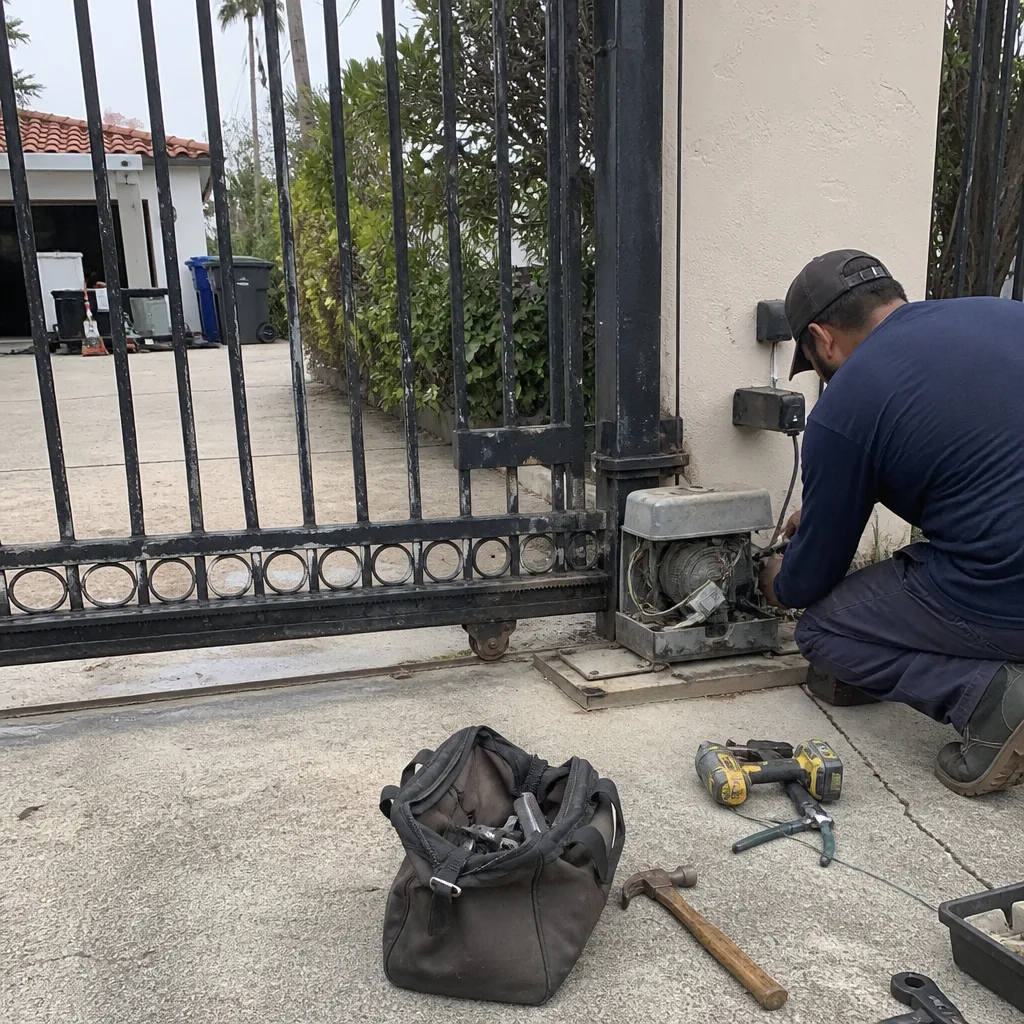 Before
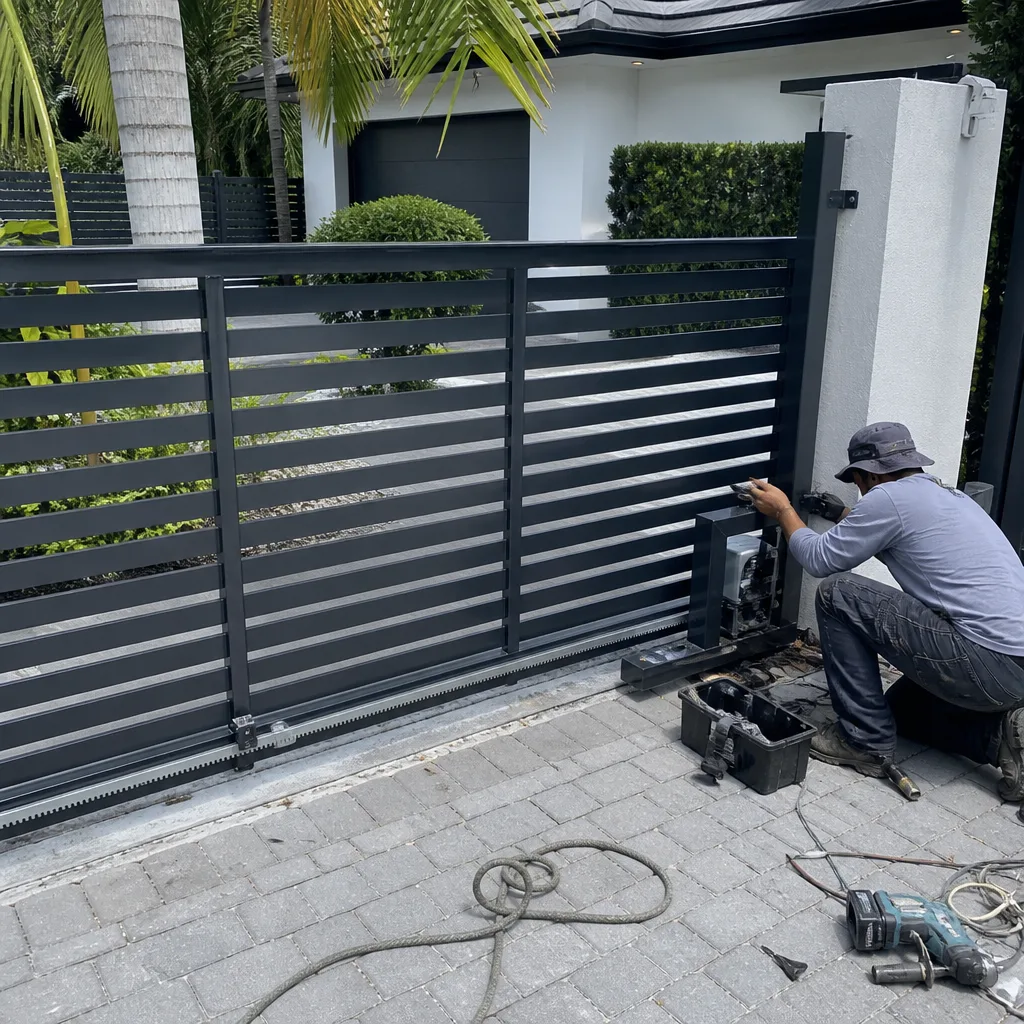 After
After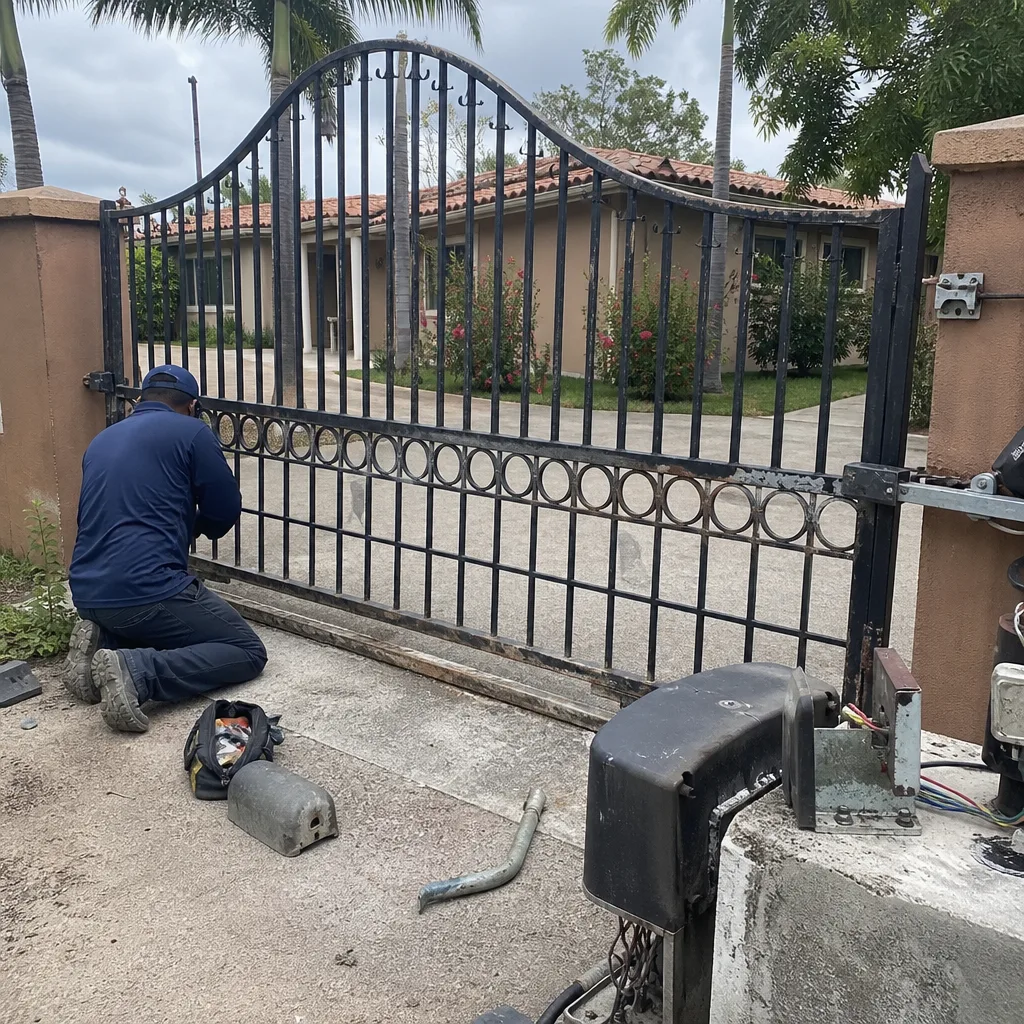 Before
 After
After Before
 After
After