
Last updated October 16, 2026
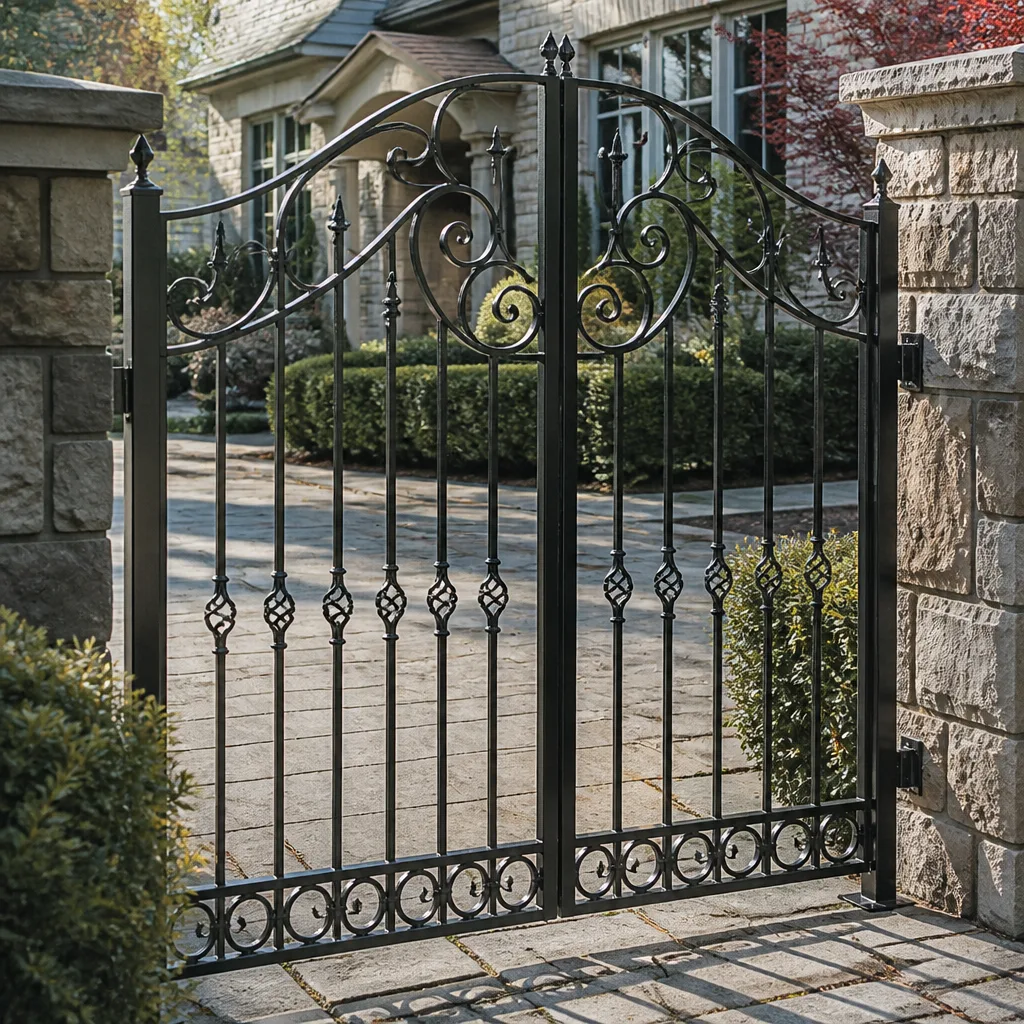 Wrought iron
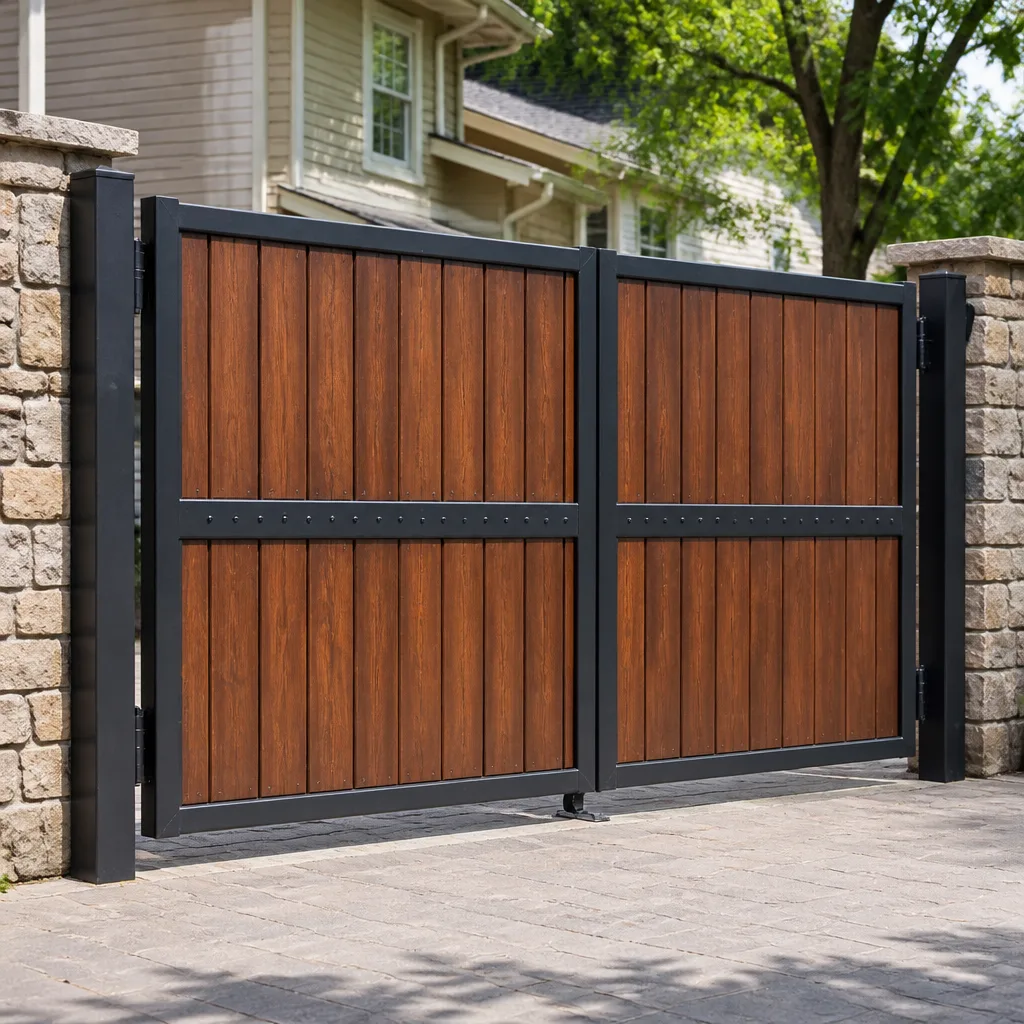 Wood & steel frame
 Farm & ranch
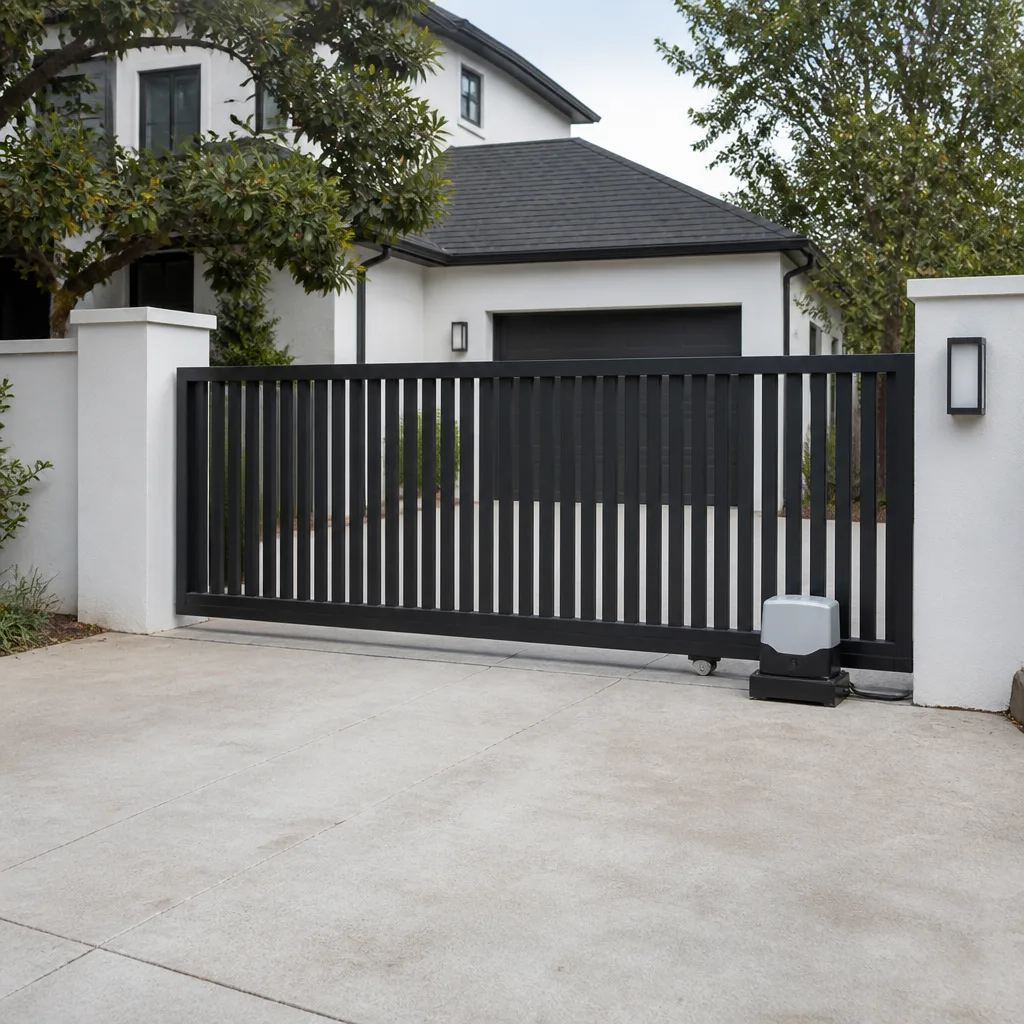 Sliding driveway gates
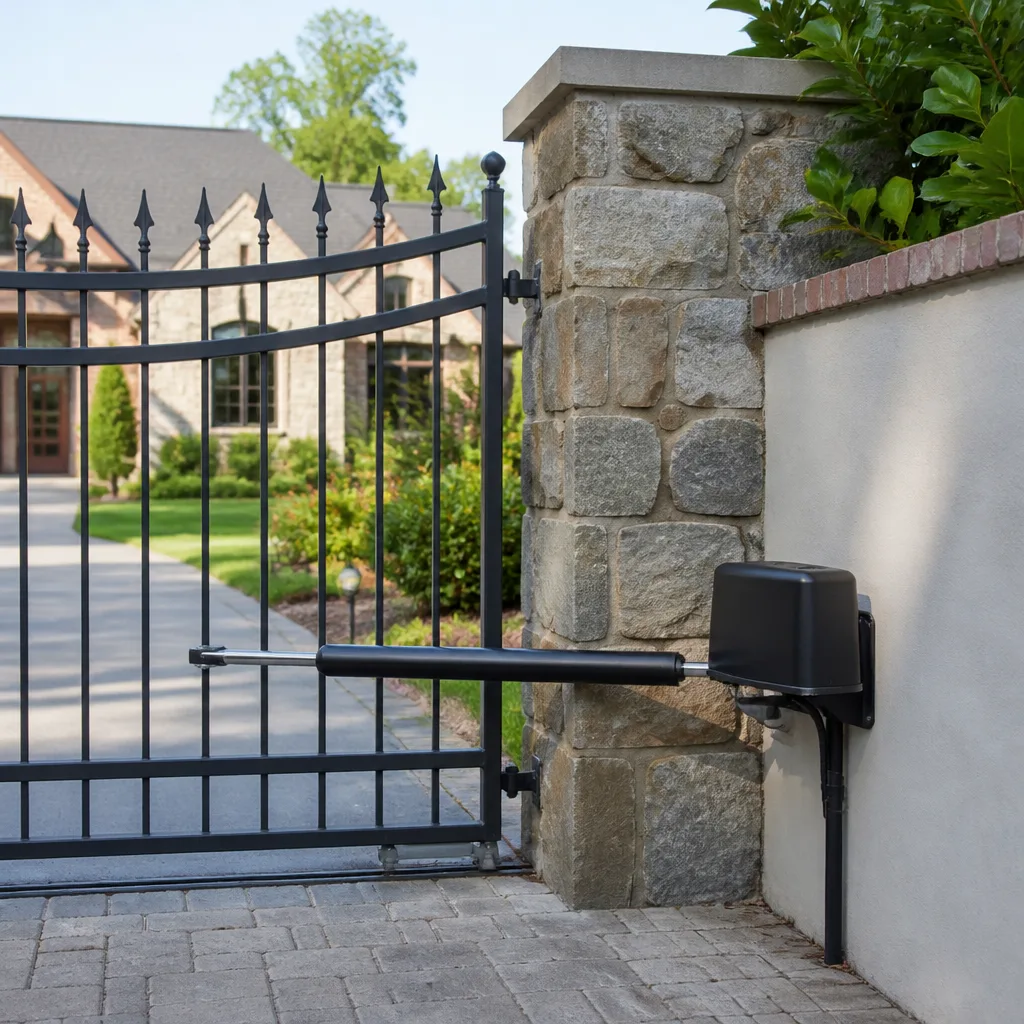 LiftMaster operators
Free on-site gate assessment - hinges, posts, and your LiftMaster or Nice gate operator checked before anything is quoted
The assessment is free and the quote is the invoice.
Get your free estimateDIY vs Professional Gate Repair: The Miami Homeowner’s Decision Guide
A Miami homeowner who replaces their own automatic gate opener without the right permit isn’t just risking a county fine. If that opener later malfunctions and injures someone, their homeowner’s insurance adjuster will look for exactly that missing permit before deciding whether the liability claim gets paid. That is the quiet reality most more guides & resources on DIY gate repair skip entirely. This guide draws the line between the repairs that are genuinely safe for a capable homeowner in Miami and the ones that quietly cross into licensed-contractor territory under Florida law. By the end, you will know which jobs you can confidently handle with a socket set and which ones belong on a professional’s truck.
Quick Answer
In Miami, simple maintenance like lubricating hinges, tightening bolts, replacing remote batteries, and reprogramming a remote are genuinely safe for a capable DIYer. Structural repairs, Gate Repair involving gate motor replacement, opener installation, and any electrical or entrapment-sensor work cross into Florida licensed-contractor territory and create insurance exposure that makes DIY genuinely costly even when the fix works. The dividing line is not skill. It is code, liability, and the 400 pounds of moving steel that a gate becomes when something fails.
Styles & brands we work with
Table of Contents
- The Repairs That Are Genuinely Safe for DIY
- Where Florida Law Draws the Line
- UL 325 and the Entrapment Problem
- The Insurance Exposure Most Guides Skip
- The Real Cost of DIY vs Professional Gate Repair in Miami
- What Miami’s Climate Does to Gates
- Common Mistakes to Avoid
- When to Call a Professional
The Repairs That Are Genuinely Safe for DIY
Not every gate repair needs a service call. Some maintenance work is straightforward, low-risk, and a reasonable way for a Miami homeowner to extend the life of a gate without spending money on labor. These are the jobs where you are working on parts that are already loose, already accessible, and unlikely to cause injury if a bolt slips.
Lubrication and Routine Maintenance
Miami’s salt air and humidity punish metal. A gate that is not lubricated here corrodes faster than the same gate in Orlando or Tampa. Lubricating hinges, wheels, and the gate motor’s drive chain takes about 30 minutes and requires no specialized knowledge. Use a lithium-based grease on metal-to-metal contact points and a silicone spray on plastic rollers. Do this every three months, and you will prevent a significant share of the wear that eventually becomes a repair bill.
Tightening Loose Hardware
Gates move thousands of times per year. Bolts back out. Hinges sag. A socket wrench, an adjustable wrench, and 20 minutes will fix most loose hardware before it becomes a structural problem. Walk the length of the gate and check every visible fastener. If the gate wobbles when you push on it, find the loose bolt and tighten it. This is genuinely safe work with no code implications.
Remote and Keypad Reprogramming
If your gate opens with a keypad or remote, reprogramming is a low-risk DIY task. Most LiftMaster and Linear openers use a straightforward learn-button process described in the owner’s manual. Same with battery replacement. These are component-level tasks that require no wiring, no structural work, and no code inspection. They are second nature after the first time.
Photo Eye Sensor Cleaning
When a gate refuses to close, the first suspect is often a dirty photo eye. Miami’s rain and dust coat the lens, and a quick wipe with a dry cloth restores the beam. This is a five-minute fix that costs nothing. The key is never attempting to re-aim or re-wire the sensor, which enters entrapment-protection territory and brings UL 325 into the conversation.
Where Florida Law Draws the Line
Florida law is clear about what a homeowner may and may not do on their own property, and the line is not where most people think. The state’s electrical and building codes treat automatic gate systems as regulated installations. Once you touch line voltage, run new wiring, or modify a motor’s control board, you are performing work that Florida statute reserves for licensed contractors.
Here is the precise boundary:
- Mechanical adjustments to existing hardware: Generally fine for DIY. You are turning bolts, not changing systems.
- Low-voltage component replacement (remotes, keypads, batteries): Fine for DIY. No permit required.
- Running new electrical conduit to a gate motor: Requires a licensed electrical contractor. No gray area.
- Replacing a gate motor or opener control board, or re-wiring line voltage: Requires a licensed contractor. The work touches regulated electrical systems and automated safety features.
- Structural gate replacement, welding, or post resetting: Requires a licensed contractor, and depending on scope, a Miami-Dade County permit.
We have watched capable Miami homeowners struggle with this more than once. The problem is not that a DIY opener swap is impossible to figure out. It is that the moment the work is done, you own the liability for every adjacent system. We specialize in electric gate repair in Miami, and a meaningful share of our calls start as “I tried to fix it myself, and now…” Those conversations are always more expensive than the original service call would have been.
UL 325 and the Entrapment Problem
UL 325 is the safety standard that governs automatic gate openers in the United States. It exists because automatic gates have killed people, most often children. The standard mandates that every automated gate include entrapment protection: photo eyes, edge sensors, or both, calibrated to reverse the gate when something is in the path. In Florida, these requirements are enforced through permitting and inspection when a new opener is installed.
What UL 325 means for the DIY question is this: when you replace a gate opener yourself, you are accepting responsibility for a safety system that must be tested and calibrated correctly or the gate becomes a weapon. The force settings must be tuned so the gate reverses on contact before it crushes a child riding a bike through the opening. The photo eye must be positioned at the exact height the standard specifies. The edge sensor, if present, must run the full length of the gate leaf. None of this is self-explanatory, and none of it is covered in a YouTube tutorial in enough depth to protect you from a liability lawsuit.
This is not scaremongering. This is the reason Florida requires permits for opener installations. The state does not care whether you are clever with a multimeter. It cares whether the entrapment protection functions. An insurance company cares even more, which brings us to the next section.
The Insurance Exposure Most Guides Skip
Here is the scenario that separates professional gate repair from every other home service: your gate injures someone, and their attorney names you in the lawsuit. Your homeowner’s insurance reviews the claim. The adjuster asks one question before anything else: was the gate system installed and maintained in compliance with local code? If you installed your own opener without a permit, the answer is no. And the claim can be denied for exactly that reason.
This is the quiet consequence most DIY gate repair articles do not mention. The repair itself might work. The gate might open and close smoothly for three years. But the exposure never goes away. Every guest, every delivery driver, every neighborhood kid who cuts through your driveway is a potential claim. If the unpermitted work contributed to the injury, the coverage you have paid for does not protect you the way you assumed it would.
There is a secondary issue in Miami specifically: windstorm requirements. Miami-Dade County has some of the strictest building codes in the country because of hurricane exposure. A gate installed without the required wind-load engineering can fail during a storm, and that failure becomes another data point in a claim. Professional installers in Miami know these requirements. DIYers typically do not. For gate motor work tied to automated systems, the interplay between electrical code, UL 325, and Miami-Dade’s wind codes is exactly where we have seen homeowners get in over their heads.
When we perform gate motor repair in Miami, every job is done to code and backed by a written guarantee. That guarantee is part of the point: you are not just paying for the repair. You are paying for the person who stands behind it when something goes wrong.
The Real Cost of DIY vs Professional Gate Repair in Miami
The honest cost comparison is rarely just parts versus labor. DIY gate repair carries hidden costs that do not show up in the checkout cart at the hardware store, as detailed in our Gate Repair Cost Breakdown: The Miami Homeowner’s Reference for 2026. Here are the numbers as we see them in our Miami service area:
- Gate motor replacement (DIY): A quality LiftMaster or FAAC opener runs $600 to $1,400 at retail. Add the cost of conduit, wire, connectors, and the tools you do not already own. A realistic DIY total is $900 to $1,800, not including your time.
- Gate motor replacement (professional): A professional installation with a written price and warranty typically runs $1,200 to $2,800 depending on motor capacity, existing wiring condition, and access. The price is quoted and agreed before any work starts, so there are no surprise line items at the end.
- Simple hinge or hardware repair: Genuinely DIY-friendly. You will spend $20 to $60 in parts and an afternoon. A professional would charge roughly $125 to $300 for the same job, legitimately worth doing yourself if the hinge is accessible and not load-bearing.
- The cost of fixing a DIY mistake: This is the line nobody budgets for. A mis-wired control board is a $400 to $900 diagnostic and repair call. A photo eye that was thrown away during an opener swap is another $150 to $300. In our experience, roughly one in three DIY opener replacements in Miami requires a corrective visit within the first year.
What the table above does not show is time. A professional opener installation takes half a day. A first-time DIYer should budget two full weekends. In Miami, where outdoor work is miserable in July and August, that time is worth real money. And if the result is a gate that does not meet code, the real cost is not measurable until the claim happens.
What Miami’s Climate Does to Gates
Miami’s environment is hostile to gate hardware in three specific ways, and each one factors into the DIY decision.
Salt air. Homes east of US-1 live in a constant salt spray. Uncoated steel corrodes within months, not years. Professional gate hardware is specified for coastal environments; big-box store hardware often is not. If you live in Brickell, Coconut Grove, or Key Biscayne, buying marine-grade stainless hinges matters more than the torque spec.
Humidity and electrical connections. Miami’s humidity infiltrates every wire nut, every control board, and every low-voltage splice. A connection that is not properly sealed fails faster here than almost anywhere else in the country. This is why professionals use weatherproof enclosures and dielectric grease on every connection. A DIY repair that ignores these details will work through the dry season and fail the first week of June.
Hurricane season. From June through November, every gate in Miami is a wind-load question. A gate that is not properly secured or rated will flex, break welds, or rip its hinges out during a serious storm. This is part of why Miami-Dade has its own building code chapter for gates and fences. The county is not being bureaucratic. It is responding to what actually happens when 120-mile-per-hour winds meet a 14-foot-wide steel panel.
For homeowners who want to understand how these factors affect broader gate work, our gate repair in Miami page covers the most common failure points we see across the metro area.
Common Mistakes to Avoid
- Replacing an opener without checking the permit requirement. Miami-Dade County requires permits for automated gate opener installations. Doing the work without one is a code violation that sits on the property record and surfaces in any insurance claim related to the gate. If you are unsure, call the building department before you buy the motor.
- Throwing away the old photo eyes during an opener swap. UL 325 entrapment protection is not optional. Removing sensors turns a non-compliant installation into an uninsurable one. If the new opener does not support the old sensors, the sensors need to be replaced, not deleted.
- Using interior-grade wire nuts on exterior connections. Miami’s humidity will corrode them within a wet season. Professional installers use sealed, waterproof connectors on every gate motor splice. This is a $12 mistake that causes a $300 service call.
- Ignoring gate weight when buying a replacement opener. A sliding gate that is 14 feet of solid steel weighs 800 pounds or more. A residential opener rated for a 400-pound gate will burn out its gearbox within a year. Match the opener to the actual gate, not to the cheapest option on the shelf.
- Doing structural welding without the wind-load calculation. In Miami-Dade, gate repairs that involve structural welding must meet wind-load requirements. A welded hinge that fails during a storm is a much larger problem than a sagging gate was.
- Forgetting to reset the force adjustment after a motor swap. A gate that does not reverse on contact is a UL 325 violation and a genuine danger to children and pets. The force adjustment is not a set-it-and-forget-it dial; it must be tuned to the actual resistance of the gate.
- Assuming homeowner’s insurance covers unpermitted work. It often does not. The adjuster’s job is to find reasons to limit payouts, and unpermitted electrical or structural work is one of the easiest denials to justify.
When to Call a Professional
Call a professional when the repair involves the gate motor, line voltage, entrapment sensors, structural welding, or anything that could cause injury if it fails. These are not skill calls. They are liability calls. A licensed gate contractor in Miami carries the code knowledge, the insurance, and the accountability that a DIY repair cannot replicate. If your gate is showing signs of motor failure, call before you disconnect anything. Warden Gate Repair Miami offers free estimates in Miami, and every job comes with a written price before any work starts. Call (850) 495-7564.
See the difference
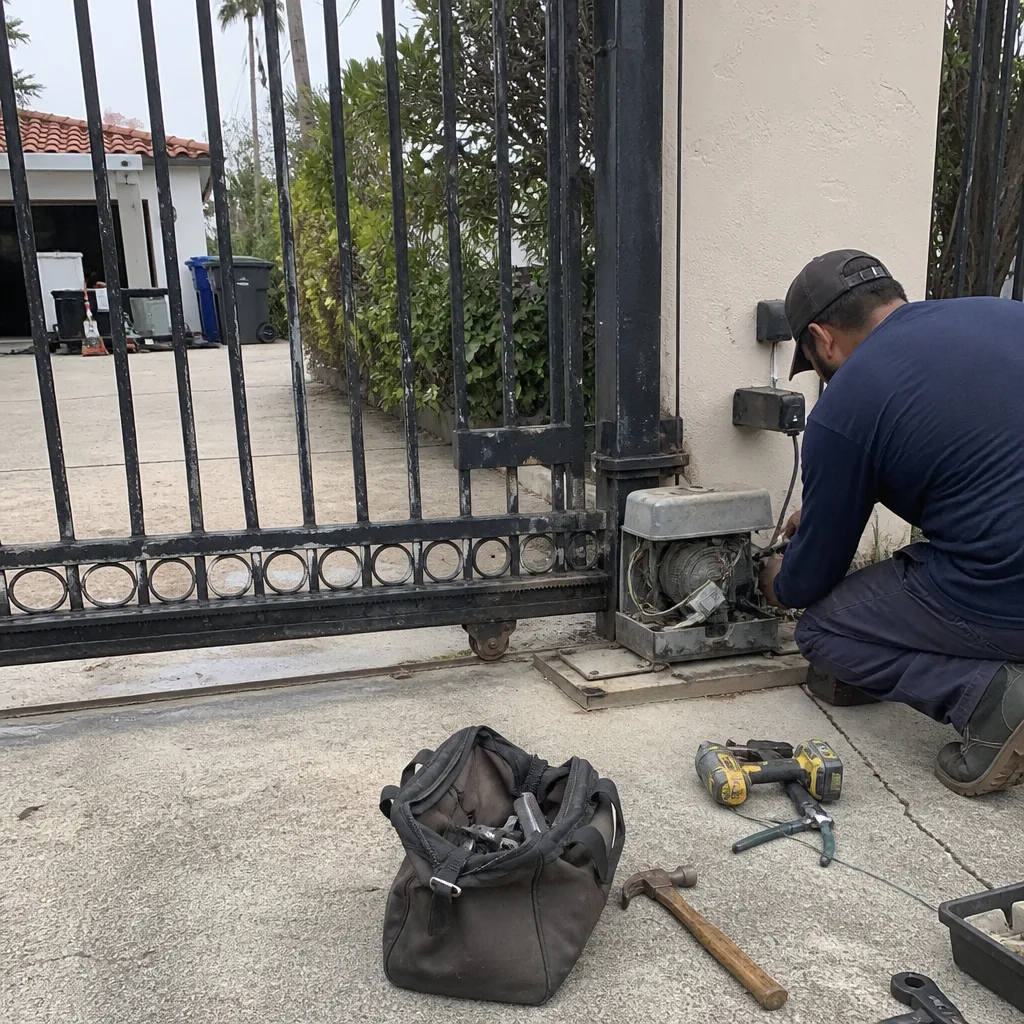 Before
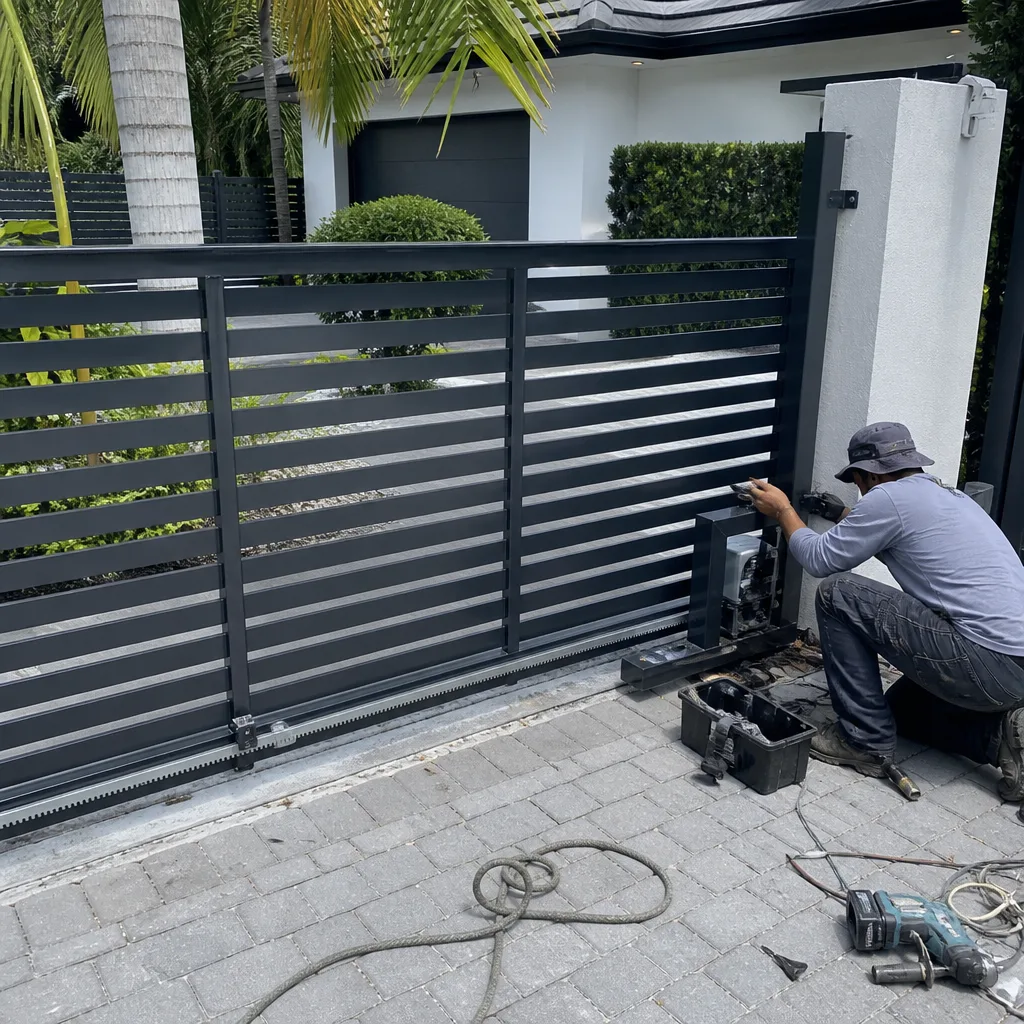 After
After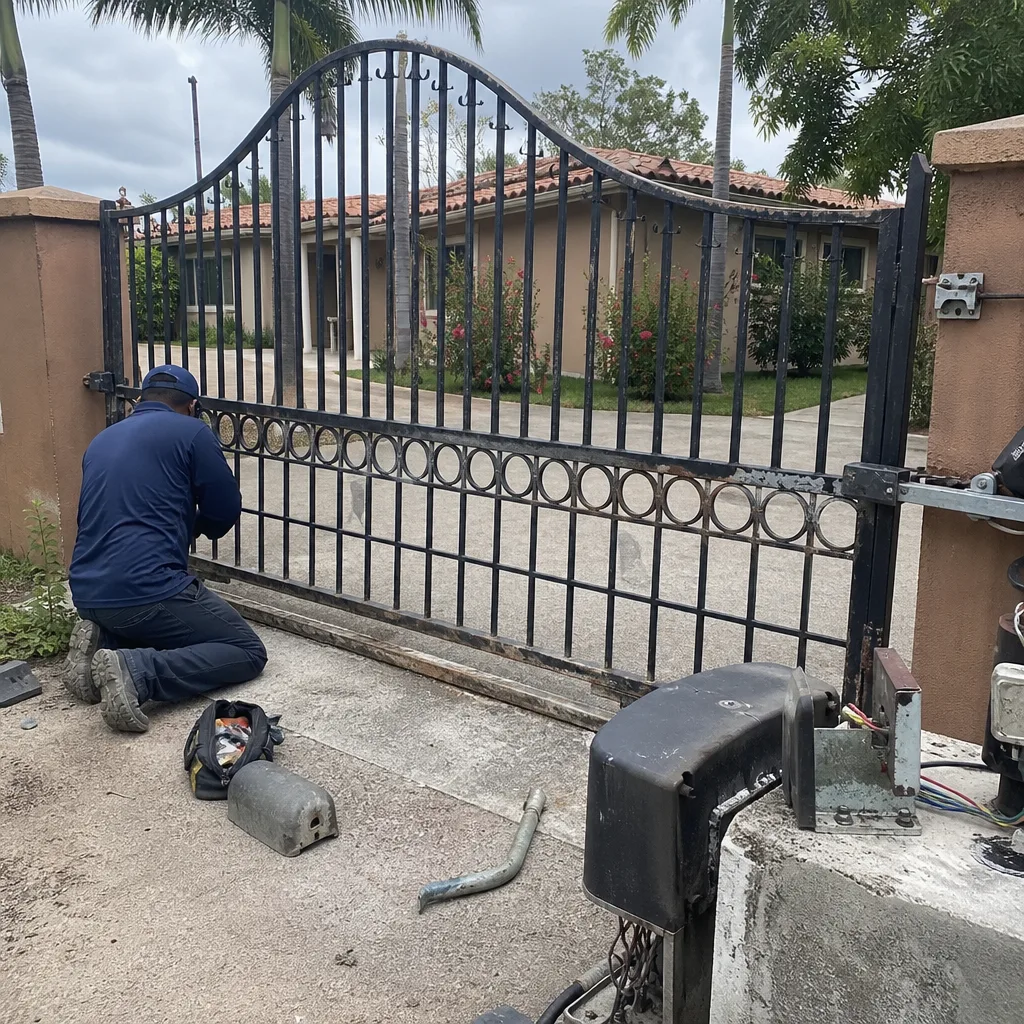 Before
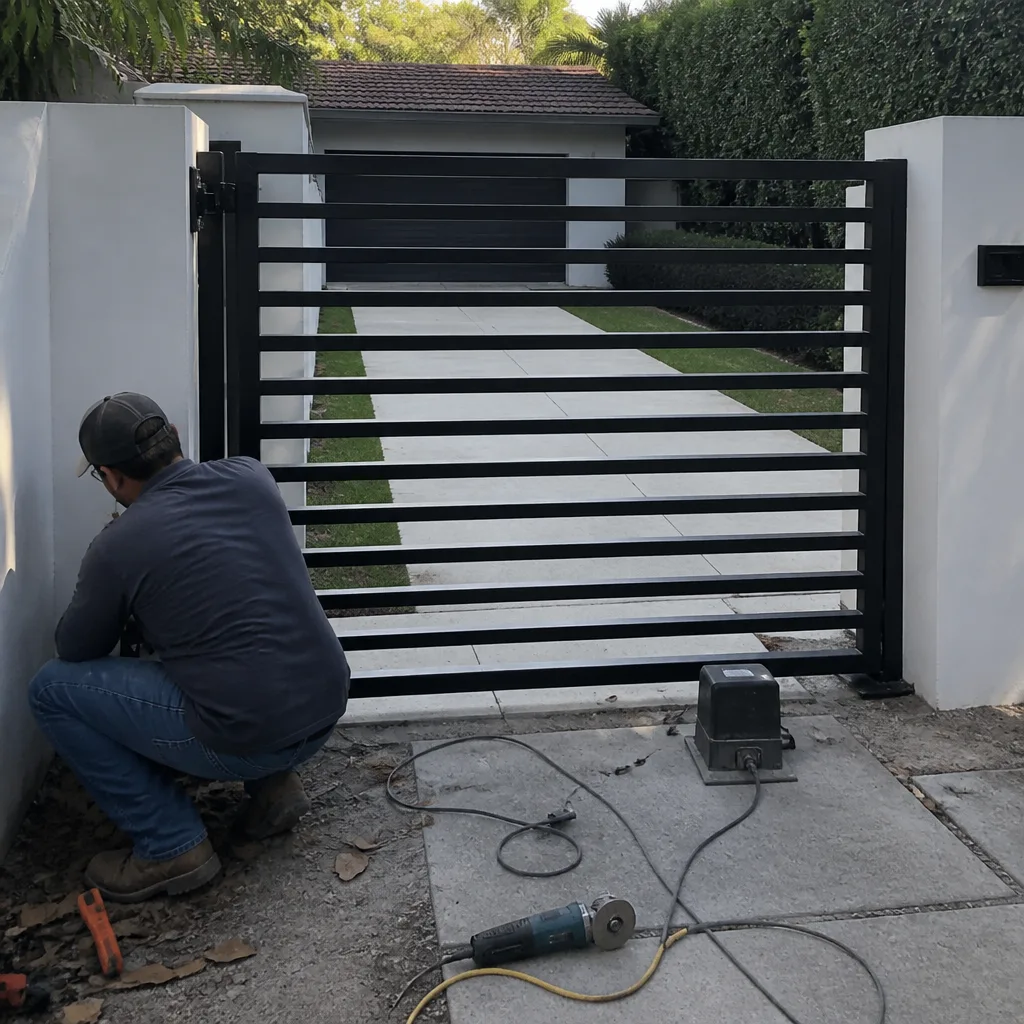 After
After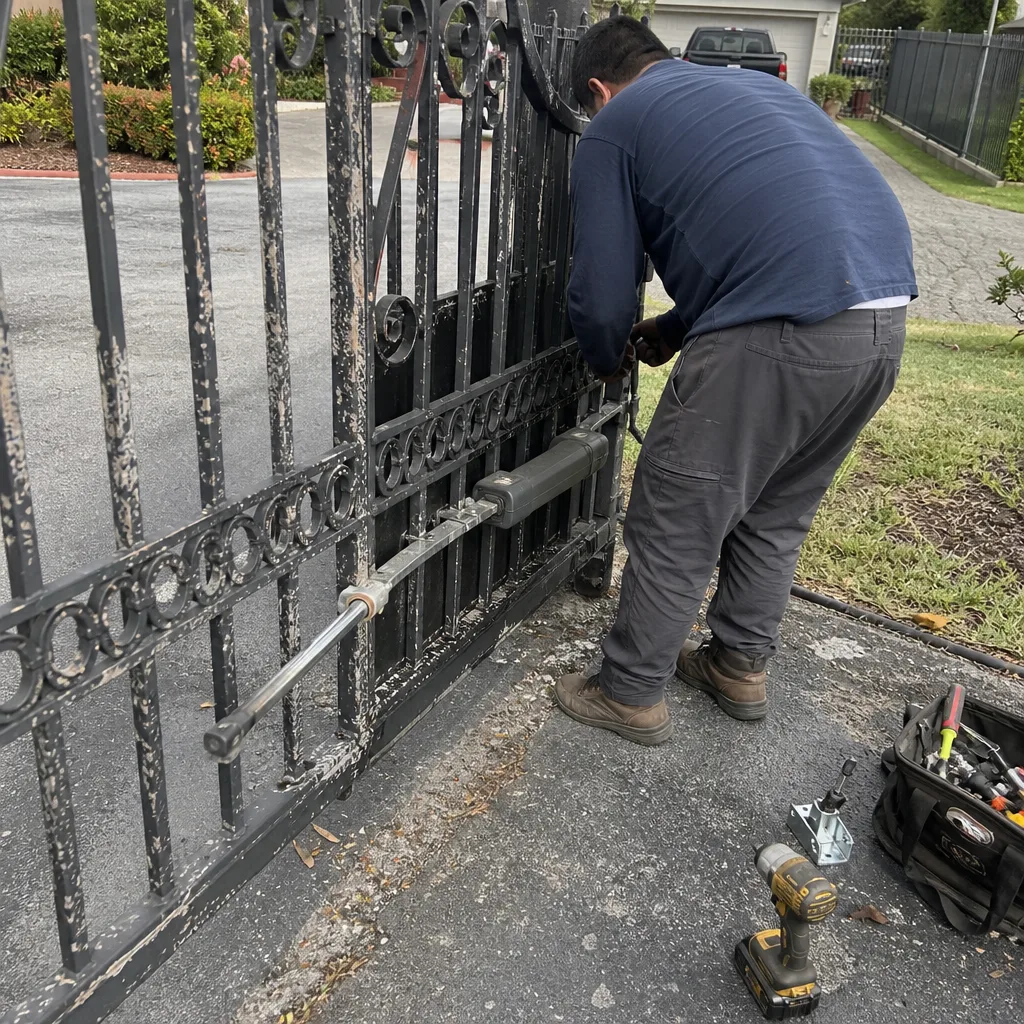 Before
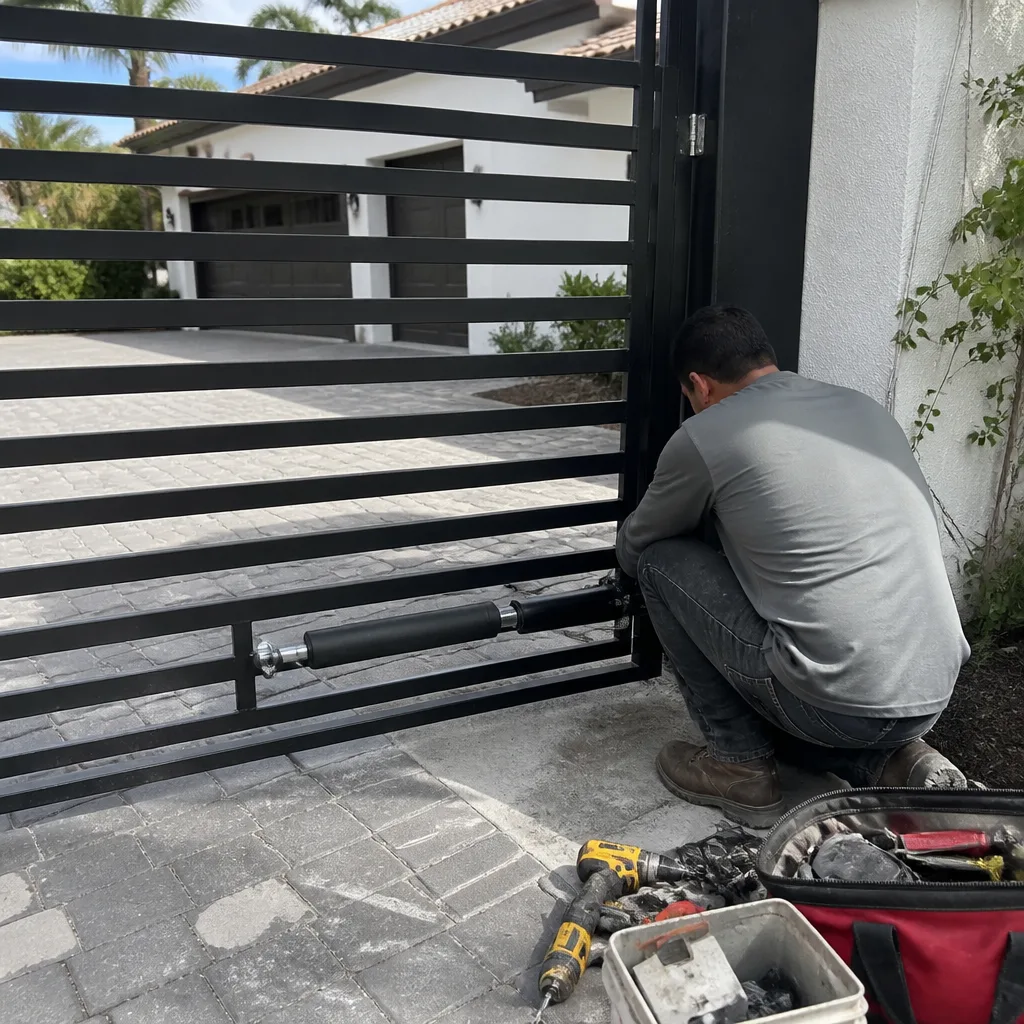 After
AfterFrequently Asked Questions
Yes, for simple mechanical maintenance like lubrication, tightening hardware, remote reprogramming, and battery replacement. You cannot legally perform electrical work, install a gate opener, or do structural welding without a licensed contractor and, in many cases, a Miami-Dade County permit.
Yes, automated gate opener installations require a permit in Miami-Dade County. This applies to new installations and full motor replacements. Component-level issues like a bad remote or keypad do not require a permit. Call (850) 495-7564 if you want to confirm what your specific job requires.
A professional gate motor repair or replacement in Miami typically costs $1,200 to $2,800 depending on motor type, wiring condition, and access. The price is quoted and agreed in writing before any work starts. For an exact quote on your gate, call (850) 495-7564, and we will give you a written price.
Your homeowner’s insurance adjuster will review whether the work was permitted and code-compliant. If the gate system was installed or modified without a permit and the unpermitted work contributed to the injury, the liability claim can be denied, leaving you personally exposed.
In our experience, the most common mistake is replacing a gate opener without reinstalling or recalibrating the entrapment protection required by UL 325. The gate works, but it no longer reverses on contact, which violates the safety standard. The second most common is using non-weatherproof electrical connections that fail during Miami’s wet season.
We service LiftMaster, FAAC, BFT, and Linear openers, along with five other major brands. Warden Gate Repair Miami is factory-trained on all nine, which means the right parts and the right knowledge arrive together. Call (850) 495-7564 for service.
Yes. Our phones are answered by a live person 24/7, and we offer same-day service for gate emergencies across Miami. Call (850) 495-7564 and a real person will take the call, not a voicemail. Learn more about our Warden Gate Repair Miami home services.
The Bottom Line
The DIY versus professional gate repair question in Miami is not about how capable you are with tools. It is about which repairs carry consequences that outlast the fix itself. Lubricate your own hinges. Change your own remote batteries. Tighten your own bolts. Follow our Gate Repair Maintenance Checklist for Miami Homeowners for these tasks. But the moment the work touches electricity, entrapment protection, structural integrity, or a Miami-Dade permit, the smart decision is a licensed professional who carries the liability so you do not have to. In a city with Miami’s climate, codes, and insurance realities, that line is the difference between a saved service call and an exposure you cannot undo.
Written by Cole Rafferty, Owner at Warden Gate Repair Miami, serving Miami since 2008.