
Last updated October 16, 2026
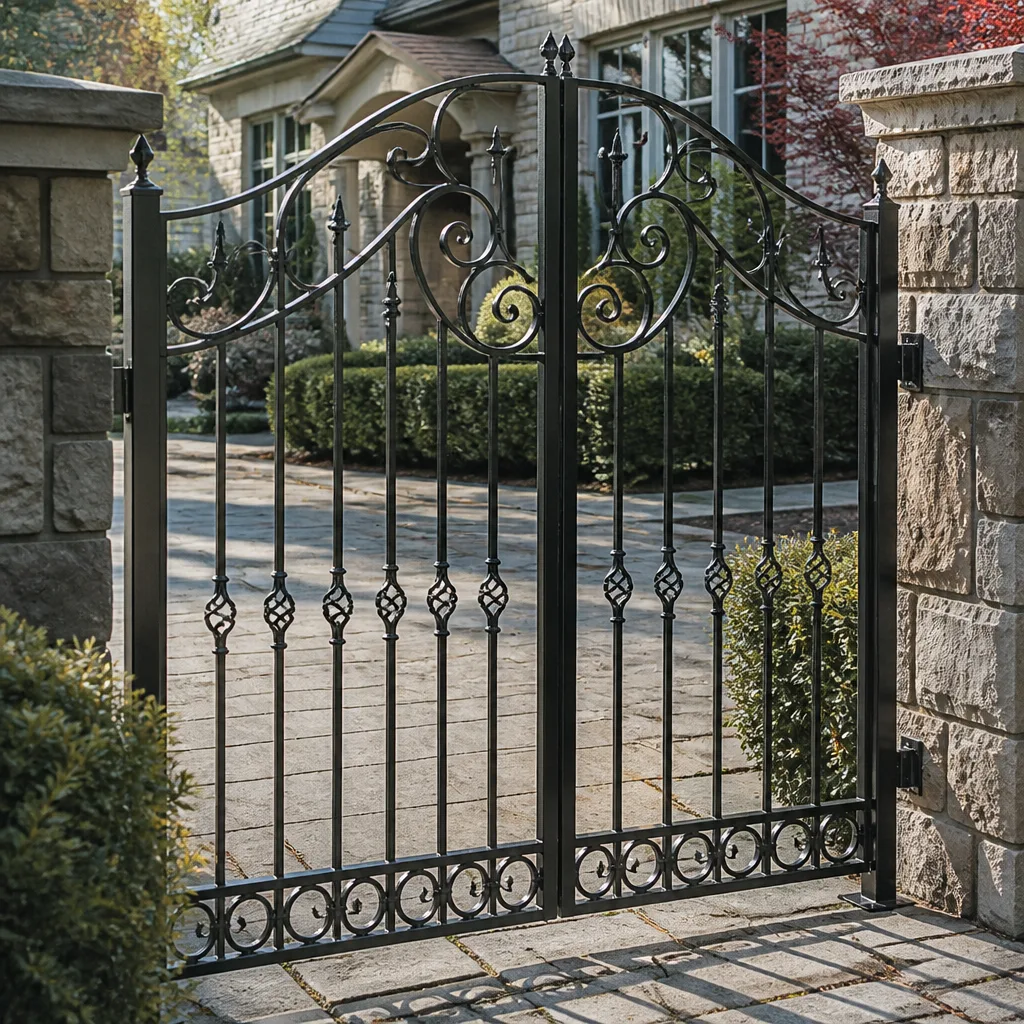 Wrought iron
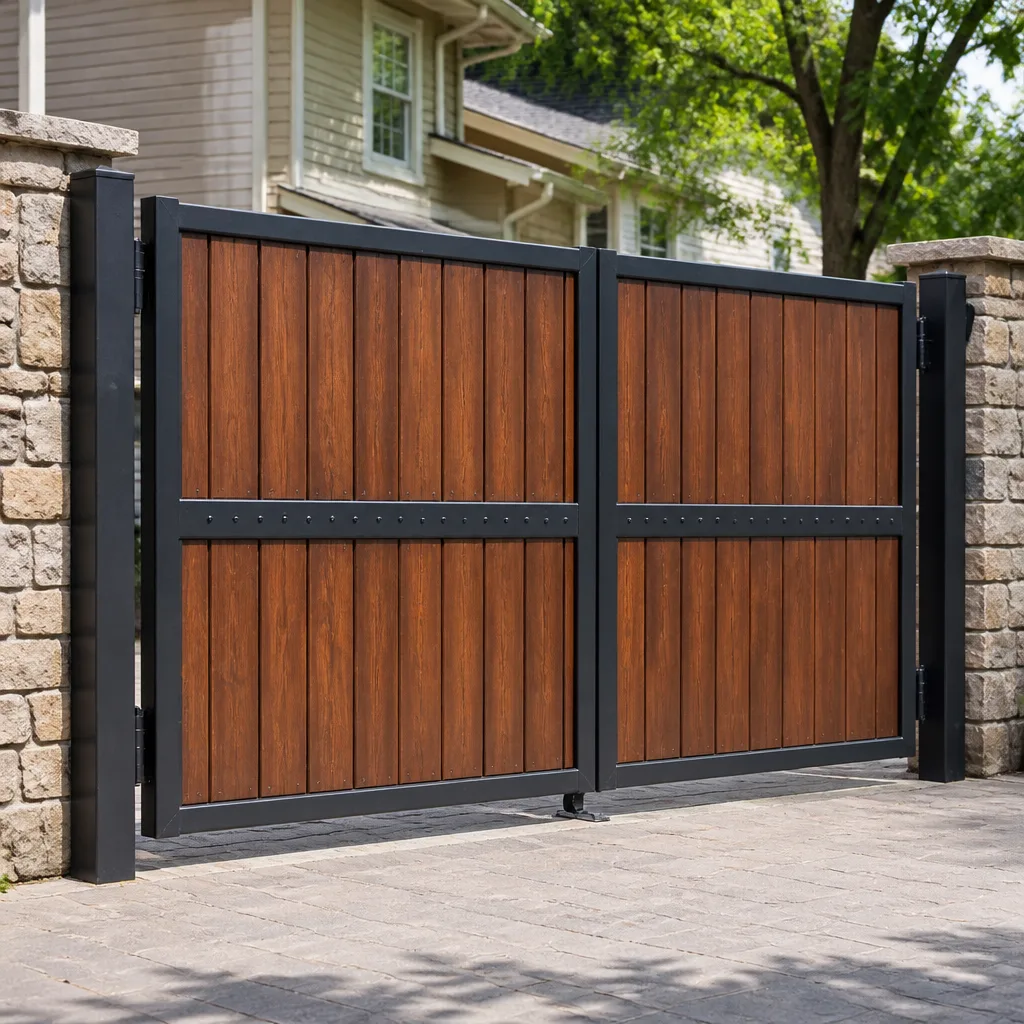 Wood & steel frame
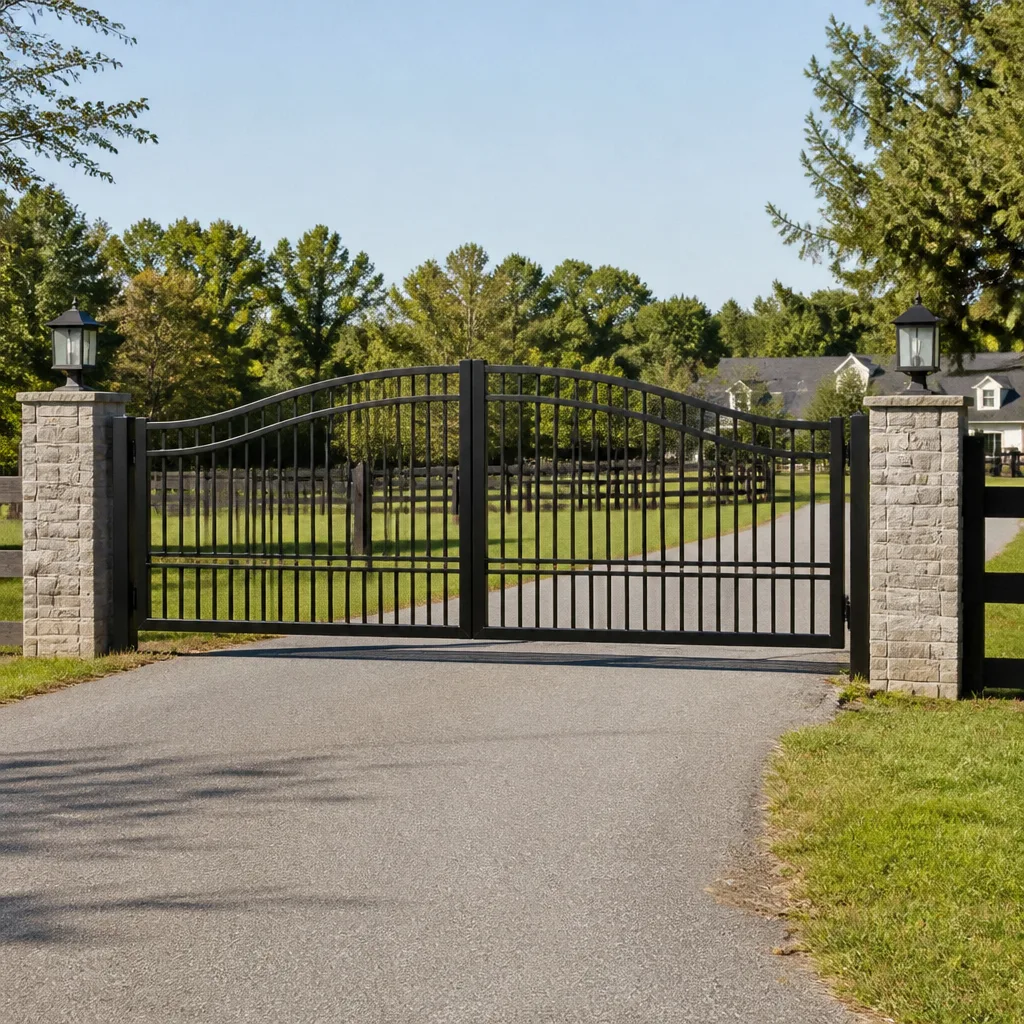 Farm & ranch
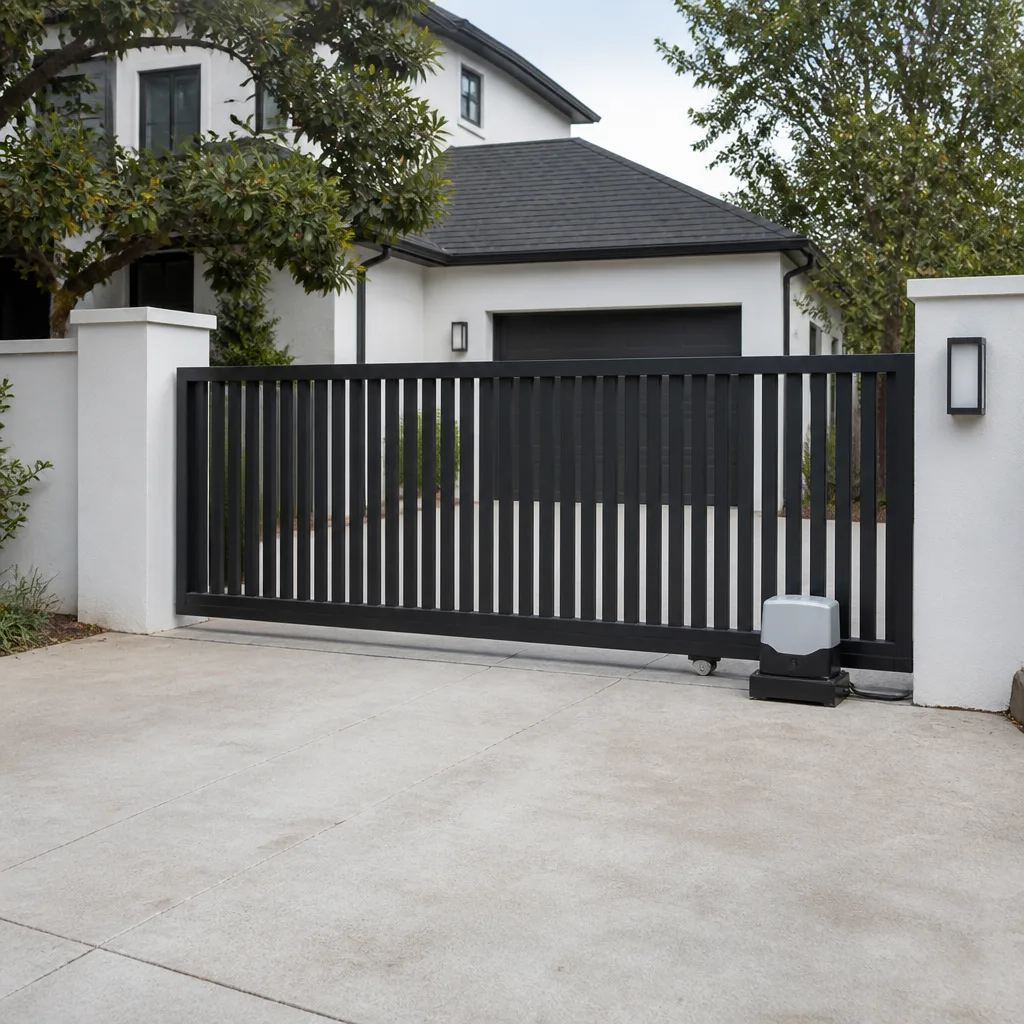 Sliding driveway gates
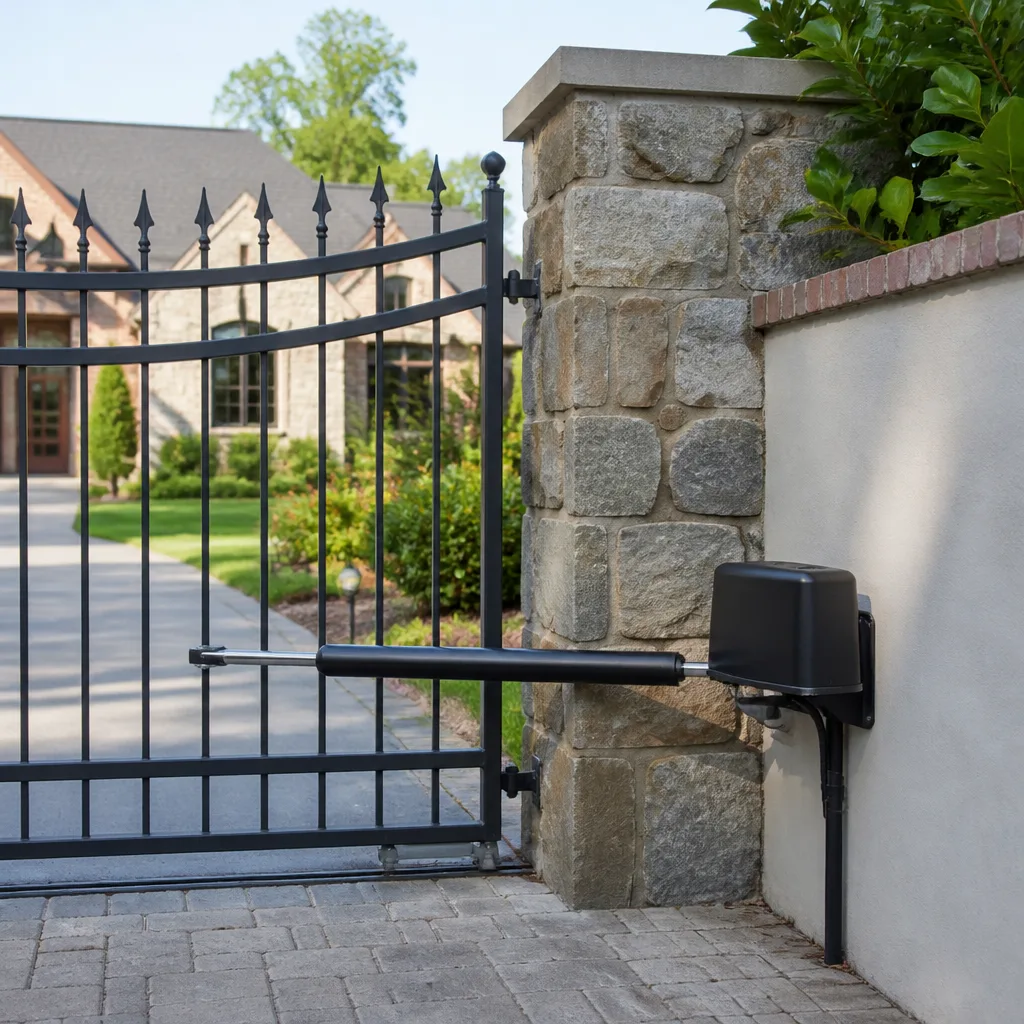 LiftMaster operators
Free on-site gate assessment - hinges, posts, and your LiftMaster or Nice gate operator checked before anything is quoted
The assessment is free and the quote is the invoice.
Get your free estimateGate Repair Maintenance Checklist for Miami Homeowners
Most homeowners inspect their gate only after it stops working. In Miami, by the time a gate fails, the hinge corrosion or motor strain that caused it has usually been building for six to nine months. A $15 fix became a $400 repair. This guide is built around the two forces that destroy gates fastest in South Florida: tropical moisture and the stop-and-start stress of hurricane season prep. You’ll learn a month-by-month maintenance calendar tied to Miami’s actual seasons, which lubricants actually hold up in this humidity, how to test your opener’s safety functions, and what to document so any future repair takes minutes instead of hours.
Styles & brands we work with
Quick Answer
A gate maintenance checklist for Miami homeowners should follow a monthly visual inspection, quarterly lubrication with marine-grade or lithium-based products (never WD-40), seasonal torque and auto-reverse testing on the opener, and a pre-hurricane-season hardware audit every May. The two biggest destroyers here are salt-air corrosion and humidity-driven rust, so fastener heads, hinge backs, and weep holes need attention that generic checklists skip. Documenting each inspection with photos and notes cuts future repair diagnosis time dramatically.
Table of Contents
- Why Miami Destroys Gates Faster Than Anywhere Else
- The Month-by-Month Maintenance Calendar for Miami
- Lubrication in Miami Humidity: What Works, What Fails
- How to Test Opener Torque and Auto-Reverse on LiftMaster, Elite, and FAAC Models
- Salt-Air Corrosion: Visual Inspection Points Most Homeowners Miss
- Documenting Your Gate’s History So Repairs Take Minutes
- Hurricane Season Preparedness for Your Gate
- Common Mistakes to Avoid
- When to Call a Professional
- Frequently Asked Questions
- The Bottom Line
Why Miami Destroys Gates Faster Than Anywhere Else
Miami’s climate is uniquely punishing on gate hardware. The combination of year-round humidity, salt-laden air from the Atlantic, and intense UV exposure means components that last a decade in Orlando or Tampa can fail here in five to seven years without regular attention. We’ve replaced hinge pins on Coral Gables homes that rusted through in under four years. We’ve pulled gate motors in Pinecrest where the capacitor terminals corroded to green powder because the weep holes were blocked by wind-blown debris.
The mechanism is straightforward. Salt particles from ocean air settle on metal surfaces. Miami’s humidity keeps those surfaces damp almost constantly. The result is a continuous electrochemical corrosion process that never stops, even when the gate sits idle. Unlike drier climates where rust only forms during rain events, South Florida hardware corrodes around the clock.
What does this mean for your maintenance routine? Frequency matters more than products alone. A gate that gets a thorough inspection every three months in Denver can go six months without issue. In Miami, thirty days of neglect at the wrong time of year undoes a season of care.
The second Miami-specific factor is storm-driven mechanical stress. Hurricane shutters, evacuation prep, contractor vehicles, and generators all mean gate openers run more cycles in August alone than they do from November through April. Each cycle puts strain on the motor, the sensor alignment, and the limits. Gates that work fine in March stall in September because nobody checked the torque settings after six months of heavier use.
If you’re new to gate ownership in Miami or have lived with a failing gate for too long, our Gate Repair in Miami guide explains the full repair landscape. For now, let’s build a maintenance routine that accounts for this climate.
The Month-by-Month Maintenance Calendar for Miami
Miami has three distinct maintenance periods, and your checklist should shift with them. The dry season runs roughly November through April. The wet season runs May through October. Hurricane prep compresses into the May-to-July window. Here is a month-by-month plan that reflects those rhythms.
Dry Season: November through April
These months are when Miami gates actually get a break from moisture, but dust and debris accumulate faster. Dry-season maintenance focuses on cleaning, tightening, and lubrication since the air is less humid and lubricants last longer.
- November: Full visual inspection of hinges, fastener heads, and the base of the gate leaf. Tighten any loose bolts now while the weather is mild. Check the weep holes at the bottom of the gate motor housing and clear them with a small plastic pick, not metal.
- December: Test the auto-reverse function (detailed steps below). Run the gate through three full open-close cycles and listen for changes in motor pitch. Lower temperatures can reveal strain that was masked by heat-expanded components.
- January: Lubricate hinges, latch pivot points, and the chain or gear drive. This is the best window of the year for a thorough lubricant application in Miami because humidity is lowest and the product won’t wash out.
- February: Inspect wire insulation on the low-voltage line from the house to the opener. UV exposure plus heat cycling cracks insulation over time. Look for exposed copper anywhere the wire touches concrete or metal edges.
- March: Clean the photocell or safety sensor lenses with a dry microfiber cloth. Pollen and dry-season dust coat these sensors and cause false reversals. This is the most common “phantom” gate problem we see in early spring.
- April: Pre-hurricane parts audit. Order replacement hinge bolts, sensor brackets, or motor capacitors now if anything showed wear over the dry season. Supply chains slow down after the first named storm.
Wet Season: May through October
Wet-season maintenance in Miami is about preventing water intrusion and corrosion. The humidity makes metal rust faster, and standing water around the gate track or foundation accelerates the damage.
- May: Hurricane prep (full section below). Test the manual release handle and ensure you can open the gate by hand in under 30 seconds with no tools.
- June: After the first heavy rain, check the gate post bases for puddling. Water pooling around the hinge post for more than a few hours indicates drainage needs work. Re-grading the area or adding a channel drain prevents the most expensive repair on any gate: post replacement.
- July: Inspect for rust blooms on hinge backs, spring hooks, and chain links. Catch surface rust early and treat with a corrosion converter, not just paint. Painting over rust seals moisture in and speeds the failure.
- August: Listen to the motor during peak heat. Motors in enclosure boxes can overheat in Miami’s August sun, especially if the enclosure has no ventilation. If the motor trips a thermal overload and re-sets, that’s a warning sign, not a one-off.
- September: Full torque and limit test. This is peak hurricane season and the gate has been running heavy cycles all summer. Reset limits if needed or call a technician if the gate is sluggish in either direction.
- October: End-of-season deep clean. Remove all accumulated sand, leaf litter, and salt film from the track, rollers, and motor housing. Salt film left over the dry season accelerates corrosion exponentially.
This calendar applies whether you have a simple swing gate on a BFT operator or a sliding gate with a Linear board. The principles don’t change, but the specific access points do. If you’re unsure what kind of system you have, our Electric Gate Repair in Miami guide explains the common configurations we see across South Florida.
Lubrication in Miami Humidity: What Works, What Fails
What you lubricate with matters more in Miami than almost anywhere else in the country. The wrong product attracts grit, breaks down in humidity, or washes out in afternoon thunderstorms. One of the most common maintenance-induced failures we see is a gate that was carefully lubricated with the wrong product every month for years.
What Works
- White lithium grease (spray or paste): Holds up well in humidity and doesn’t wash out easily. Best for hinge pins and latch mechanisms. Apply in a thin layer, not a thick coat. Excess grease attracts sand and creates a grinding paste.
- Marine-grade bearing grease: Designed specifically for salt-air environments. More expensive, but the single best choice for hinge bearings and roller assemblies on sliding gates. We recommend it for homes within two miles of the coast.
- Silicone spray (dry type): Good for sensor housings, rubber gaskets, and plastic components. Does not leave a sticky residue and does not degrade rubber. Use sparingly on metal-to-metal contact points because it doesn’t hold up under load.
- Dry PTFE (Teflon) spray: Excellent for track surfaces on sliding gates. Reduces friction without attracting debris. This is the right choice for the track, not oil.
What Fails Within Weeks in Miami
- WD-40 or any general-purpose penetrating oil: This is the most common mistake we see. WD-40 is a solvent that briefly lubricates and then evaporates, leaving the metal with less protection than it had before. In Miami’s humidity, that means rust starts within days. Use it only for un-seizing a stuck bolt, never as a maintenance lubricant.
- Traditional machine oil (3-in-1 oil, motor oil): Too thin for gate hinges under load. It runs off in heat and breaks down in humidity. It also attracts sand and dust that grinds against the bearing surface.
- Graphite powder on exterior hardware: Graphite is great for locks indoors. Outside in Miami, humidity binds it into a paste that does the opposite of lubricating. We’ve cleaned graphite paste out of latch mechanisms more times than we can count.
Lubrication Frequency
For Miami homes:
- Within one mile of the coast: Lubricate hinge and latch points every 6 weeks during the wet season, every 3 months in the dry season.
- Inland (Doral, Kendall, Westchester): Every 2 months in the wet season, every 4 months in the dry season.
- Sliding gate tracks: Every 4 weeks year-round, regardless of location. Sand from construction sites and beach winds ends up in sliding tracks everywhere in Miami-Dade.
How to Test Opener Torque and Auto-Reverse on LiftMaster, Elite, and FAAC Models
Opener torque is the amount of force the motor applies to move the gate. Too little, and the gate stalls or moves slowly. Too much, and the gate becomes a safety hazard that won’t reverse when it hits an obstacle. Auto-reverse is the safety function that stops and reverses the gate if it encounters resistance while closing. Both need regular testing, and both are straightforward to check without special tools.
Step 1: Auto-Reverse Test on a Swing Gate
- Close the gate and stand at the edge of the gate leaf’s path, not in it.
- Place a rigid object like a small traffic cone or a 2×4 upright in the closing path.
- Trigger the gate to close. It should stop and reverse direction within 1 to 2 seconds of contacting the object.
- If the gate pushes through the obstacle, pushes it aside, or stops without reversing, the torque is set too high or the safety circuit has failed. Do not use the gate in automatic mode until this is corrected.
Step 2: Auto-Reverse Test on a Sliding Gate
- With the gate fully open, place a roll of paper towels or a similar crushable but stable object on the track near the closing limit.
- Trigger the gate to close. It should reverse on contact with the object.
- Sliding gates with Ghost Controls systems have a sensitivity dial on the control board. If the gate doesn’t reverse, reduce sensitivity by one increment and retest.
Step 3: Torque Check by Sound and Speed
On LiftMaster, Elite, and FAAC openers common in Miami homes, you can assess torque without equipment:
- Listen: A properly adjusted opener runs with a steady, even hum. A strained opener makes a labored, rising sound under load, especially on the closing cycle as the gate leaf fights gravity.
- Watch the speed: The gate should move at a consistent speed from fully open to fully closed. Slowdown at the start, mid-travel hesitation, or acceleration near the ends all indicate torque or limit problems.
- Check the gap: On Elite and FAAC swing openers, the gate should close fully against the stop without the motor continuing to grind. If you hear the motor working after the gate stops, the limit switch is out of adjustment and the motor is overheating.
- Date and weather conditions: “Inspected March 15, dry season, 78°F, no rain in previous week.” This tells a technician whether recent conditions could explain a fault.
- Photos of the hinge to post connection: Take a photo from the same angle each time. Side-by-side comparison reveals gradual corrosion that you wouldn’t notice month to month.
- Audio note or video of the motor: Record 5 seconds of the gate opening at normal speed. If the sound changes, you have evidence of when the change happened. We’ve diagnosed bearing failures purely from homeowners’ phone videos recorded months apart.
- Cycles per day estimate: Rough numbers help. “Postman + two Amazon deliveries daily, plus six car exits.” Opener wear is measured in cycles. Knowing your usage rate predicts failures before they happen.
- Any work done, products used, or parts replaced: Be specific. “Lubricated hinges with white lithium, March 15.” Vague notes help less than detailed ones.
- Test the manual release every May 1. You must be able to open the gate by hand if power is out for days. Practice it. Time yourself. Under 30 seconds, no tools, is the goal. If you can’t reach the release handle or don’t know where it is, find out now, not during a storm warning.
- Inspect and tighten the gate’s physical stops. Wind loads push the gate leaf against its stops. Loose or missing stops allow over-travel, which damages the opener arm on swing gates and the limit switch on slide gates.
- Check the battery backup. If your opener has a battery backup module, test it by cutting power to the opener and running the gate through one full cycle on battery. Battery cells degrade in Miami’s heat faster than in cooler climates. A battery that hasn’t been tested in two years is not a backup, it’s a paperweight.
- Verify that water drains away from the motor. Standing water around the motor base during a heavy storm can flood the enclosure. Clear drainage paths, add sandbags if needed, and make sure the weep holes are open.
- Program the gate to stay open or closed. Decide now whether your hurricane plan calls for the gate to be left open (to avoid blocking emergency vehicles) or closed (for security during evacuation). Whichever you choose, be sure every household member knows how to set it manually.
- Using WD-40 as a maintenance lubricant. It’s a solvent first. In Miami humidity, it strips any remaining protective film and leaves bare metal exposed to salt air. This single mistake causes more premature gate wear than any other homeowner action.
- Ignoring the gate for the entire dry season. Dry season is when Miami gates get a break from rain, but dust, pollen, and construction debris accumulate faster. Failing to clean and lubricate during November through April means the wet season starts with a compromised gate.
- Painting over rust without treating it first. Paint traps moisture against the corroding metal. The rust continues underneath and the paint flakes within months. Treat with a corrosion converter first, then prime, then paint.
- Over-tightening the hinges to quiet a squeak. A squeaking hinge needs lubrication, not torque. Cranking down on the hinge pin compresses the bearing surface and accelerates wear. When the hinge finally loosens, it’s sloppier than before.
- Running the gate on a dead battery backup and assuming it works. Battery backup modules fail silently. By the time you need it during a hurricane, the battery has been dead for months. Test it on a schedule, not on a feeling.
- Skipping the auto-reverse test because it “seems fine.” Auto-reverse failure is invisible until a child or pet is in the path. This is the single most important safety test on your gate, and it takes three minutes. There is no excuse for skipping it in a Miami home with kids or grandchildren.
- Waiting until the gate fails to call a technician. By the time a gate stops working, the underlying problem has been developing for months. Preventative calls catch issues at the $80 to $150 stage instead of the $400 to $1,200 stage.
What These Tests Catch in Miami Specifically
Summer heat changes how these systems behave. A torque setting that was correct in December can be too high in August because the metal expands and the gate geometry shifts slightly. If you test auto-reverse once in the winter and skip summer testing, you are operating with an unknown safety margin during the exact months when children are home from school and contractors are in and out of the driveway. Test monthly during hurricane season.
Never attempt internal opener repairs yourself. The capacitor on a gate motor stores voltage even after power is cut and can deliver a painful shock. This is work for a trained professional. Our Gate Motor Repair in Miami page explains what motor service includes and what the warning signs look like before a failure.
Salt-Air Corrosion: Visual Inspection Points Most Homeowners Miss
If you live anywhere east of I-95 in Miami, you are in the salt-aerosol zone. Salt particles travel further inland during storm winds, so even Doral and Westchester see salt deposition during hurricane season. Here are the inspection points that generic checklists skip entirely.
Fastener Heads
Look at the tops of all bolts and screws on the hinge plates, the motor bracket, and the latch assembly. Salt corrosion starts on the flat top of the fastener head where water pools. If you see rust blooms on fastener heads, the thread below is likely compromised too. Replace fasteners at the first sign of corrosion with stainless steel or marine-grade equivalents.
Weep Holes on Motor Housings
Gate motor enclosures have small drainage holes at the bottom. In Miami, these clog with wind-blown sand, fine organic debris, and insect nests. A blocked weep hole turns the enclosure into a moisture trap. The motor sits in humid, salt-laden air and the internal components corrode silently. Check weep holes every month in the wet season. Clear them with a plastic zip tie or a small tube brush, never a metal pick that can scratch the protective coating.
Hinge Backs
The back side of a hinge plate, the part you can’t see without leaning around the gate post, is where corrosion is most advanced by the time it becomes visible from the front. Spray a marine-grade corrosion inhibitor on the backs of hinge plates and spring hooks twice a year, even if they look clean. In our experience, hinge backs on Coconut Grove and Key Biscayne gates show surface rust within 18 months of installation without this treatment.
Wire Connectors and Low-Voltage Splices
Underground low-voltage wire splices without proper waterproofing are a silent failure point. Moisture enters the splice, corrodes the copper, and resistance builds over time. The opener works harder, runs hotter, and eventually fails. Inspect all accessible splice points. If they are wrapped in electrical tape only, that’s insufficient for Miami. Properly sealed heat-shrink connectors or silicone-filled wire nuts are the minimum standard here.
The Photocell Alignment Bracket
Bronze, brass, and aluminum brackets corrode at different rates when paired with steel hardware. Galvanic corrosion between dissimilar metals is accelerated by salt air. Check the photoelectric sensor bracket, usually mounted a few inches off the ground. If the bracket has become loose or the sensor droops out of alignment, the gate will refuse to close or behave erratically. This is a simple part to replace but a confusing fault to diagnose if you don’t know to look for it.
Documenting Your Gate’s History So Repairs Take Minutes
The most underrated maintenance habit in Miami is documentation. When a technician arrives to diagnose a gate problem, the repair moves faster if they can see what was done before, when, and what the gate looked like when it was healthy. Here’s what to document and how.
What to Document After Each Inspection
Why This Cuts Repair Time
When a gate fails, the technician is essentially a detective working backwards from the symptom. A documented history turns that process from an hour of investigation into a five-minute review. The tech can see that the gate was lubricated regularly but a hinge was replaced six months ago, which shifts suspicion to the opposite hinge or the motor. The alternative is testing everything from scratch while the gate sits inoperable.
Keep this log in the notes app on your phone or in a small notebook taped inside the motor enclosure. Either works. The point is that it exists and stays with the house.
Hurricane Season Preparedness for Your Gate
Hurricane season runs June 1 through November 30 in Miami. Your gate will be asked to do more during these months than at any other time: run during power flickers, open and close more frequently for evacuations and deliveries, and withstand wind-driven rain and flying debris. Here’s the pre-season checklist to run every May, before the first named storm.
We cover storm-related gate damage extensively in our Gate Repair in Miami guide, including what insurance typically covers and what to do if storm surge floods the motor. The preparation work above prevents most of the worst outcomes.
Common Mistakes to Avoid
When to Call a Professional
Many of the maintenance tasks in this guide are safe for a careful homeowner. Some are not. Call a professional when any of these situations apply: the gate fails the auto-reverse test and you don’t know how to adjust torque safely; you see exposed copper wiring anywhere on the system; the motor makes a grinding or screeching noise that lubrication doesn’t resolve; the gate is visibly sagging or the post is leaning; you smell burning electrical odor near the motor; or you are not comfortable working around a gate that weighs several hundred pounds and moves under motor power. The motor capacitor stores voltage and the gate itself carries enough force to break bones. Some things are worth the service call. Warden Gate Repair Miami offers free estimates throughout Miami. Call (850) 495-7564 and we’ll send a photo-badged technician with a written price before any work starts. For a complete overview of what repair service includes, see our Warden Gate Repair Miami home page.
Frequently Asked Questions
Every 6 to 8 weeks during the wet season (May through October) and every 3 to 4 months during the dry season (November through April). Homes within one mile of the coast should lubricate more frequently because salt air degrades the lubricant film faster. Use white lithium grease or marine-grade bearing grease, never WD-40. Call (850) 495-7564 if you want a specific recommendation for your gate’s age and location in Miami.
Marine-grade bearing grease is the best overall choice for hinge pins and roller assemblies on sliding gates in Miami because it resists salt-air corrosion and doesn’t wash out in heavy rain. White lithium grease is a good second choice for latch mechanisms. For track surfaces, use a dry PTFE spray. Avoid general-purpose oils and WD-40, which evaporate in Miami heat and leave metal unprotected.
Place a rigid object like a traffic cone or a 2×4 in the gate’s closing path, trigger the gate to close, and confirm it stops and reverses within 1 to 2 seconds of contact. If it pushes through the obstacle or stops without reversing, the torque is set too high or the safety circuit has failed. Do not use the gate in automatic mode until a professional corrects it. Call (850) 495-7564 for a same-day safety check in Miami.
A basic annual maintenance visit from a Miami gate technician typically costs $80 to $150 for inspection, lubrication, and minor adjustments. Repairs found during maintenance, like hinge replacement or torque recalibration, add to the total. A full motor replacement on a Miami home gate runs $650 to $1,800 depending on brand and gate type. Call (850) 495-7564 for an exact written quote before any work starts.
Lubrication, cleaning, visual inspection, and documentation are all homeowner-level tasks in Miami. Torque adjustment on a LiftMaster, Elite, or FAAC opener, hinge replacement on a sagging gate, and any electrical work should be left to a professional because the gate’s weight and the stored voltage in the motor capacitor create real risks. If you can complete this checklist confidently, you’re ahead of most Miami homeowners. If you have doubts on any section, call (850) 495-7564 for a professional assessment.
Test the manual release in early May and time yourself opening the gate by hand in under 30 seconds. Tighten the gate’s physical stops, check the battery backup with a full power-cut test, clear the motor’s weep holes, and verify that water drains away from the motor base. Decide whether your hurricane plan requires the gate left open or closed, and make sure the whole household knows how to set it manually. The full checklist appears in the hurricane preparedness section above.
The Bottom Line
A gate maintenance checklist for Miami succeeds when it accounts for what makes this city different: salt air, relentless humidity, seasonal storms, and heavy opener cycle counts during hurricane months. The calendar in this guide turns those challenges into a schedule. The lubrication section prevents the single most expensive DIY mistake we see in Miami. The auto-reverse tests protect the people who matter most. And the documentation habit ensures that when something does go wrong, a technician reads your gate’s history like a chart instead of starting from zero. Follow this plan, and a Miami gate that would normally last 7 years will run 12 or more with predictable performance. For more guides & resources, explore our blog. That’s the difference between maintaining and waiting.
Written by Cole Rafferty, Owner at Warden Gate Repair Miami, serving Miami since 2008.
See the difference
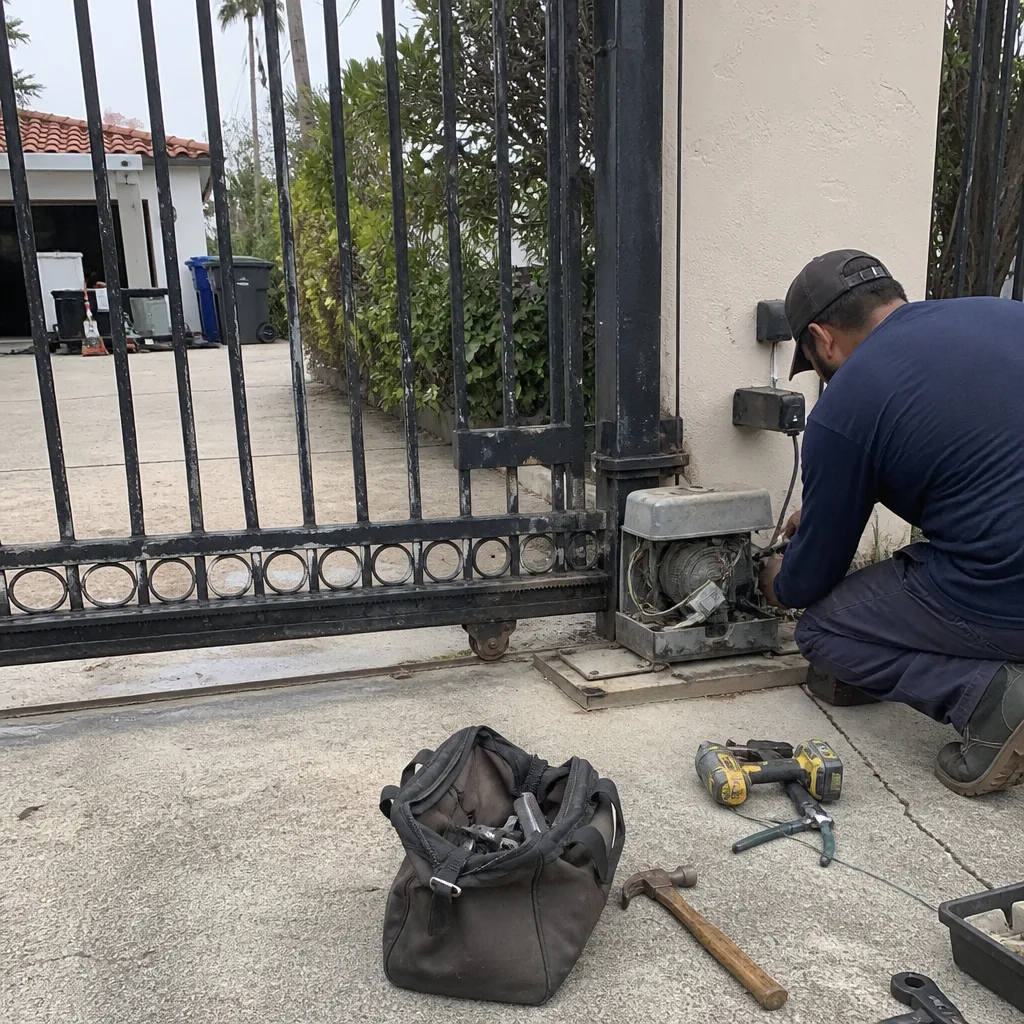 Before
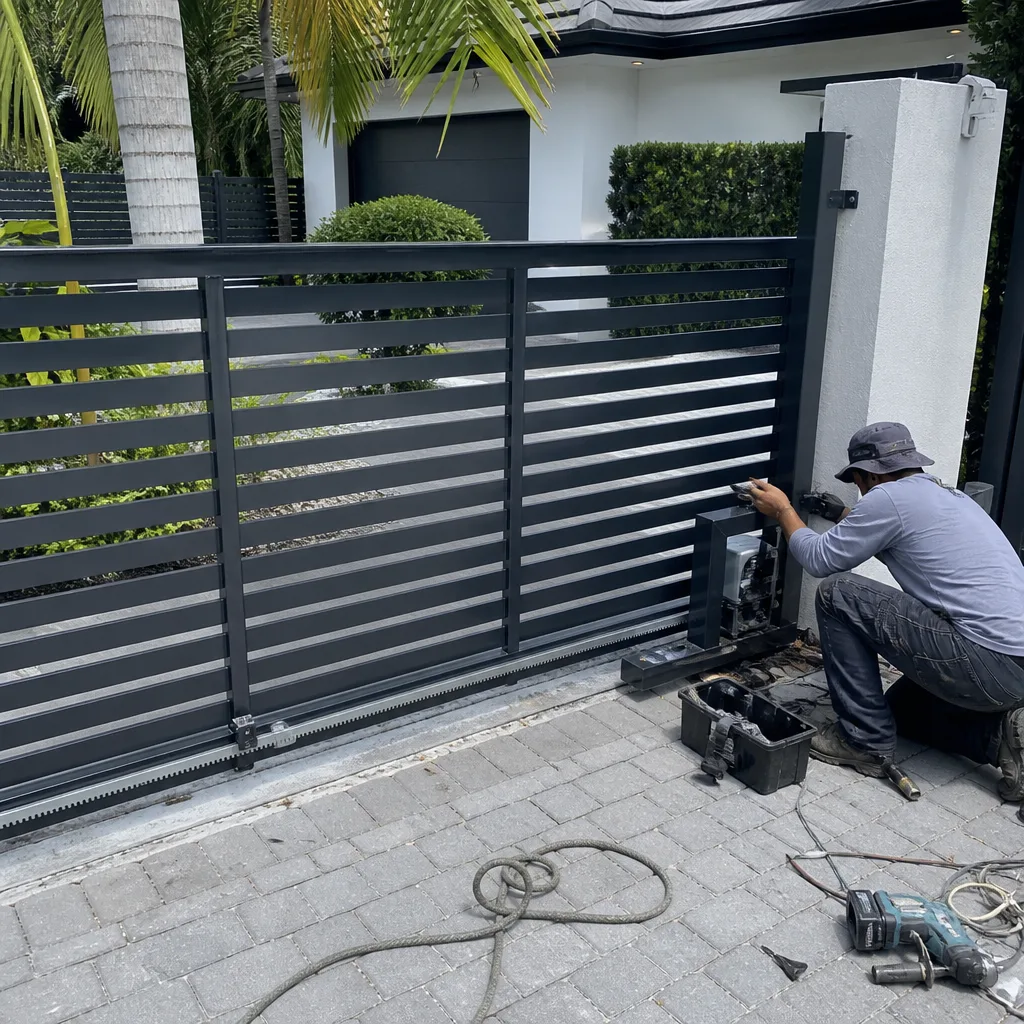 After
After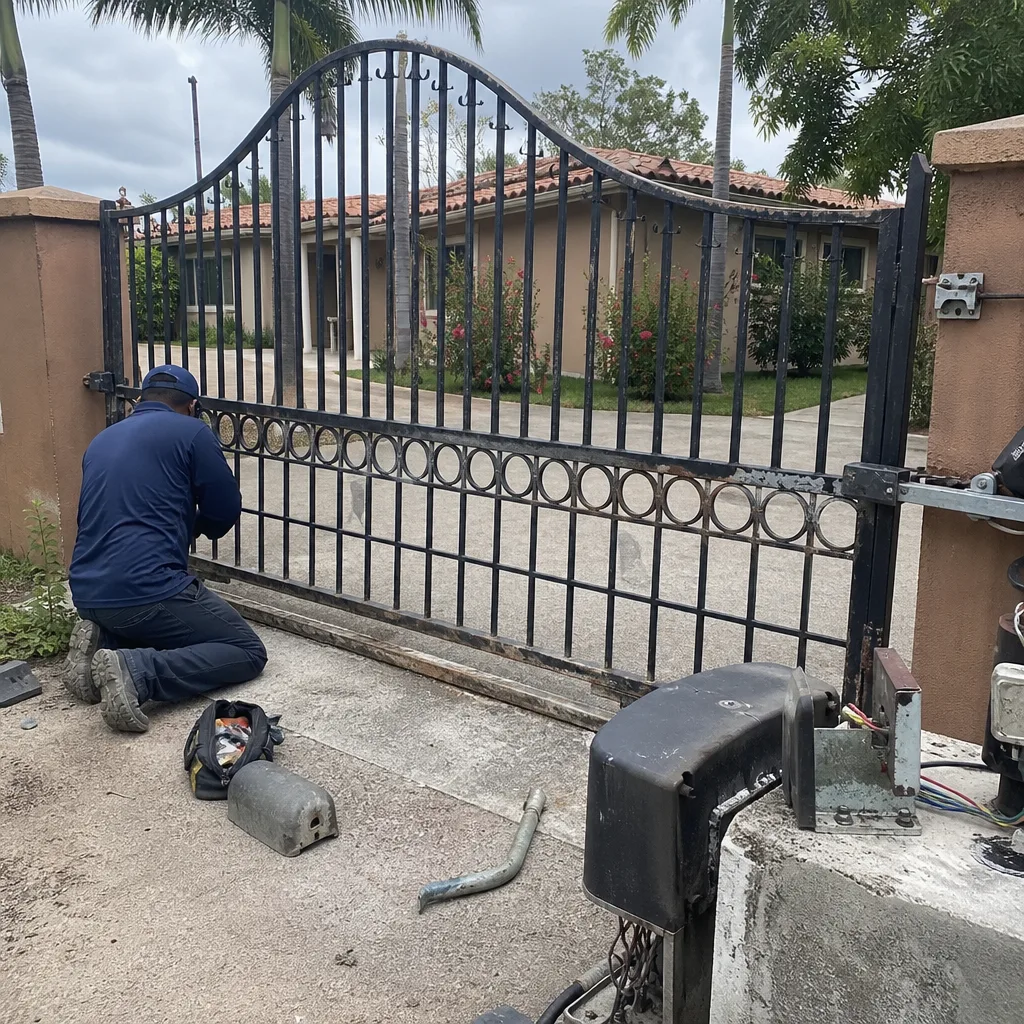 Before
 After
After Before
 After
After